Grove Park Historic District (Boundary Increase)
Also known as: Kimberly Amendment to Grove Park Historic District; See Also:
Grove Park Historic District (Boundary Increase) is a historic district in Asheville, Buncombe County, North Carolina, listed on the National Register of Historic Places on December 18, 1990 (reference number 90001918). The National Park Service records its significance in Community Planning and Development and Architecture at the local level.
Facts from the NPS National Register database (); nomination summary October 2026. Last updated . Sources for each fact.

The pin is a point inside the NPS boundary polygon, not a surveyed location.
Why it's listed
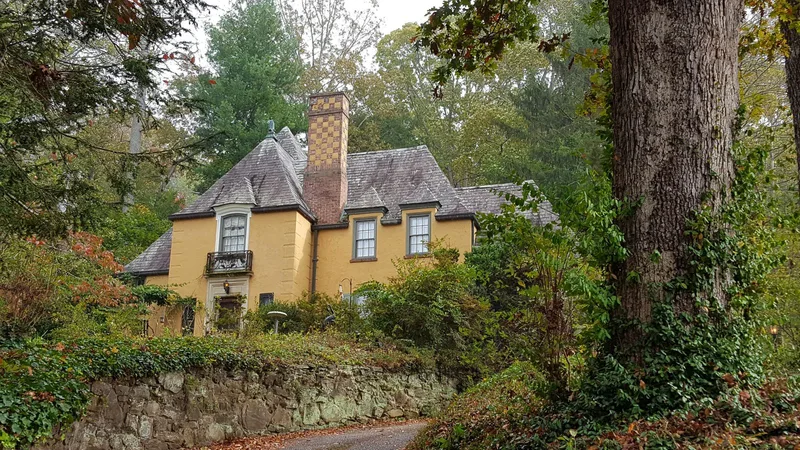
Laid out in 1923 by Asheville developer Edwin Wiley Grove on the Kimberly family farmland, this residential area lies north of the original Grove Park neighborhood along Kimberly Avenue, which runs beside the Asheville Country Club golf course. Lots on Kimberly Avenue are 100 feet wide, while side streets such as Farrwood Avenue have lots about 60 feet wide, and service alleys run behind many properties. Most houses were built between 1923 and 1940 by L. B. Jackson, who built some eighteen houses here, and by architects including William Waldo Dodge Jr. and Charles N. Parker. The houses range across Colonial Revival, Tudor Revival, Spanish Colonial Revival and bungalow styles. The area is listed for its cohesive 1920s and 1930s streetscapes and for its link to Asheville's suburban growth in that boom period. The 1925 clubhouse of the Grove Park Inn Country Club is included as a contributing property.
Significance in brief: The nomination argues the area is important under criterion C for its distinctive streetscapes and period-style houses, which are distinguished from the post-World War II development around it. It is also significant under criterion A for reflecting Asheville's growth during the 1920s and 1930s, when middle and upper-middle class homeowners moved from the city center to suburbs. The area includes three pre-existing Kimberly family houses and the 1925 country club clubhouse and golf course that attracted buyers to Grove Park.
Machine-generated summary. This summary was generated by a language model from the official nomination document and has not been reviewed line by line by an editor. It may contain errors. Check the source document before relying on any detail. Source: nomination document (PDF) · National Archives catalog entry. NRHP reference 90001918, listed December 18, 1990. Summary generated October 2026 (model claude-haiku-5-5, prompt v1.1-2026-10-29, confidence medium).
Key facts
| Official database NPS National Register database, ref. 90001918 , checked | |
|---|---|
| Address | Roughly, Kimberly Ave. from Maywood St. to N of Evelyn Pl., including Grove Park Inn Country Club, Asheville |
| County | Buncombe County |
| Listed | December 18, 1990 |
| Reference number | 90001918 |
| Resource type | District |
| Areas of significance | Community Planning and Development, Architecture |
| Level of significance | Local |
| National Historic Landmark | No |
| Acreage | 150 |
| Official document, machine-extracted Nomination form (National Archives) , checked | |
| Period of significance | C. 1890; ca. 1899; ca. 1913; 1923-1940 |
| Architect / builder | Dodge, William Waldo, Jr., architect; Jackson, Lynwood Baldwin, builder; Parker, Charles N., architect; Lord, William Henry, architect; Greene, Ronald, architect; Linderberg, H. T., architect |
| Architectural style | Colonial Revival; Tudor Revival; Bungalow/Craftsman; Spanish Colonial Revival |
| Criteria |
|
| Official dataset NPS cultural-resource GIS (NRHP locations) | |
| Coordinates | 35.61921, -82.54712 |
What listing means for this property
This is a historic district. Buildings within its boundary are either contributing (they add to the district's significance) or non-contributing. Owners of contributing income-producing buildings can claim the 20% federal rehabilitation tax credit; homeowners should look at state credits. National Register districts impose no design review by themselves; a local historic district ordinance, if one exists, does (the difference explained).
General information, not legal or tax advice. Rules change; confirm with your State Historic Preservation Office or a qualified adviser.
Questions about Grove Park Historic District (Boundary Increase)
When was Grove Park Historic District (Boundary Increase) added to the National Register of Historic Places?
Grove Park Historic District (Boundary Increase) was listed on December 18, 1990. Its National Register reference number is 90001918.
Is Grove Park Historic District (Boundary Increase) a National Historic Landmark?
No. The National Park Service database (snapshot of May 2026) lists Grove Park Historic District (Boundary Increase) on the National Register but does not record it as a National Historic Landmark.
Where is Grove Park Historic District (Boundary Increase)?
Roughly, Kimberly Ave. from Maywood St. to N of Evelyn Pl., including Grove Park Inn Country Club, Asheville, Buncombe County, North Carolina; coordinates 35.61921, -82.54712.
Why is Grove Park Historic District (Boundary Increase) historically significant?
According to a machine-generated summary of its nomination form: The nomination argues the area is important under criterion C for its distinctive streetscapes and period-style houses, which are distinguished from the post-World War II development around it. It is also significant under criterion A for reflecting Asheville's growth during the 1920s and 1930s, when middle and upper-middle class homeowners moved from the city center to suburbs. The area includes three pre-existing Kimberly family houses and the 1925 country club clubhouse and golf course that attracted buyers to Grove Park. Check the nomination document before relying on any detail.
Who designed or built Grove Park Historic District (Boundary Increase)?
The nomination form names Dodge, William Waldo, Jr., architect; Jackson, Lynwood Baldwin, builder; Parker, Charles N., architect; Lord, William Henry, architect; Greene, Ronald, architect; Linderberg, H. T., architect as architect or builder (extracted by machine from the nomination; check the source document).
Where can I read the original nomination for Grove Park Historic District (Boundary Increase)?
The nomination form is a public record held by the National Archives: nomination document (PDF).
Sources and further reading
- National Park Service, National Register of Historic Places database (snapshot May 2026), reference 90001918.
- Nomination form (PDF, National Archives) — catalog entry
- Wikipedia article (used for cross-checking only; text not reproduced here)
- Wikidata Q18151153
- This listing as JSON
Last updated November 2026. Found an error? See the editorial policy for how to report it.