Wesleyan Methodist Church
Also known as: See Also:Stanton, Elizabeth Cady, House

Why it's listed
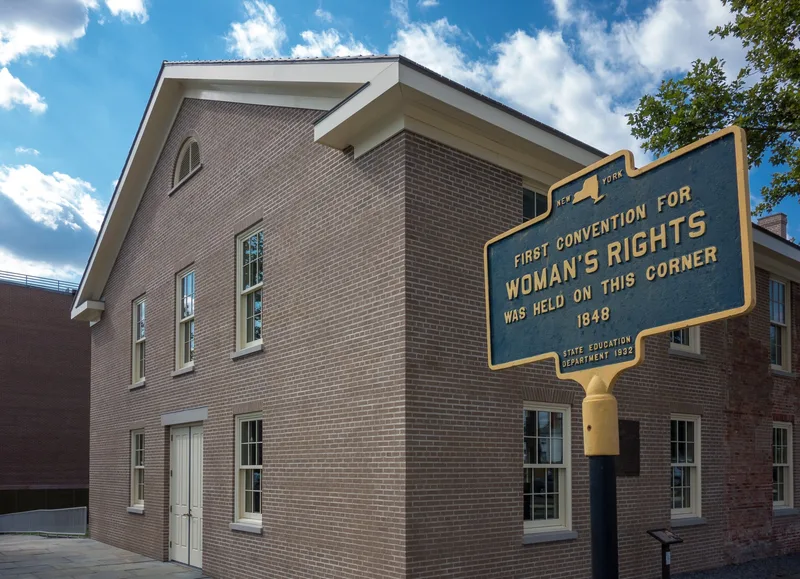
The Wesleyan Methodist Church, also called the Wesleyan Chapel, is a building in Seneca Falls, New York. It was the site of the first Women's Rights Convention in 1848. The property is one of five sites in Seneca Falls and Waterloo grouped as the Women's Rights Historic Sites. The others are associated with Elizabeth Cady Stanton, Mary Ann McClintock, Jane Hunt and Amelia Bloomer, who were leading figures in the early movement. The sites are also linked to the abolitionist and temperance movements. Documents attached to the entry show that reviewers discussed how much of the chapel's original character survives, particularly inside the building, and asked for historic photographs of the exterior. A photograph taken in 1979 shows the east elevation from the southeast. The full nomination text is not included in the available material, so details of the building's design, construction and builders are not given here. The property was listed in August 1980 as part of the thematic group.
Significance in brief: The chapel was the site of the first Women's Rights Convention in 1848. The thematic group it belongs to is tied to the early women's rights movement and to figures such as Elizabeth Cady Stanton, Mary Ann McClintock, Jane Hunt and Amelia Bloomer. The reviewers' notes raise questions about how well the chapel's integrity has been preserved.
Machine-generated summary. This summary was generated by a language model from the official nomination document and has not been reviewed line by line by an editor. It may contain errors. Check the source document before relying on any detail. Source: nomination document (PDF) · National Archives catalog entry. NRHP reference 80000361, listed August 29, 1980. Summary generated October 2026 (model claude-sonnet-5-5, prompt v1.0-2026-10-29, confidence low).
Key facts
| Address | 126 Fall St., Seneca Falls |
|---|---|
| County | Seneca County |
| Listed | August 29, 1980 |
| Reference number | 80000361 |
| Resource type | Building |
| Areas of significance | Politics/Government, Social History |
| Level of significance | National |
| Status (as stated in the nomination) | Reviewer notes question the integrity of the former chapel, especially its interior, and record that the exterior historic photographs would be requested. The notes recommend accepting four of the five nominated resources, but the property was entered in the Register on 8/29/80. |
| Acreage | 0.2 |
| Coordinates | 42.96266, -76.84590 (NPS GIS) |
What listing means for this property
Religious properties are listed for their architectural or historical significance, not their religious use. Listing is honorary and does not restrict the congregation's use of the building. The federal rehabilitation credit is generally unavailable unless part of the building is income-producing; some state programmes and preservation grants do cover religious buildings. Federal funding or permits trigger Section 106 review.
General information, not legal or tax advice. Rules change; confirm with your State Historic Preservation Office or a qualified adviser.
Sources and further reading
- National Park Service, National Register of Historic Places database (snapshot May 2026), reference 80000361.
- Nomination form (PDF, National Archives) — catalog entry
- Wikipedia article (used for cross-checking only; text not reproduced here)
- Wikidata Q7984058
- This listing as JSON
Last updated October 2026. Found an error? See the editorial policy for how to report it.