Oakwood Cemetery

Why it's listed
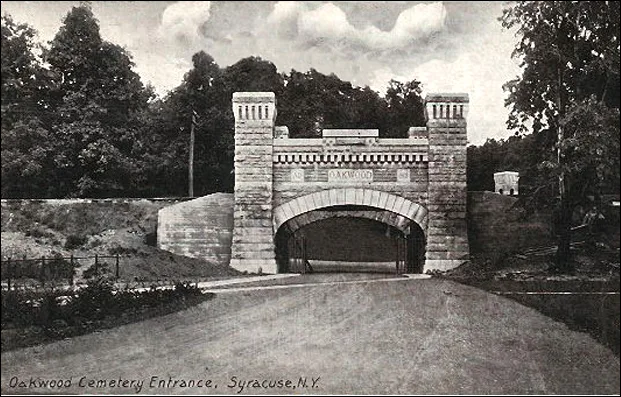
Oakwood Cemetery covers about 160 acres in southeastern Syracuse, with eight miles of roadway winding across hills, ravines and valleys left by glaciers. Howard Daniels, a New York City landscape gardener who had laid out some fifteen cemeteries, designed the original 82 acres around 1859. Later parcels, bought between 1869 and 1889 and developed until about 1940, followed the same picturesque principles. The grounds hold about 300 varieties of trees and shrubs, including a remnant native oak grove, along with vaults, mausolea, monuments and funerary art. Near the old western entrance are a granite railroad bridge built in 1902 for the Delaware, Lackawanna & Western line, a Romanesque Old Office from the same year and a chapel. The cemetery is recognized as a well-preserved example of the rural cemetery movement, where winding paths, views and plantings were meant to bring visitors close to nature. Highway construction removed the outer entrance park, but the interior design remains largely intact.
Significance in brief: The nomination argues that Oakwood is an outstanding example of the rural cemetery movement, with a picturesque design that works with the glacial landforms of the site. It was the last cemetery designed by landscape gardener Howard Daniels. Its consistent design, mature plantings, bridge, buildings and funerary art stayed intact across decades of development from 1859 to 1940.
Machine-generated summary. This summary was generated by a language model from the official nomination document and has not been reviewed line by line by an editor. It may contain errors. Check the source document before relying on any detail. Source: nomination document (PDF) · National Archives catalog entry. NRHP reference 91000522, listed May 9, 1991. Summary generated October 2026 (model claude-sonnet-5-5, prompt v1.0-2026-10-29, confidence medium).
Key facts
| Address | 940 Comstock Ave., Syracuse |
|---|---|
| County | Onondaga County |
| Listed | May 9, 1991 |
| Reference number | 91000522 |
| Resource type | District |
| Period of significance | 1859-1940 |
| Architect / builder | Howard Daniels (landscape gardener/designer) |
| Architectural style | Other: rural cemetery |
| Areas of significance | Landscape Architecture, Art, Architecture |
| Level of significance | National, Local |
| Status (as stated in the nomination) | Still an active cemetery and urban park. The original entrance area was altered by Interstate 81, though the 1902 railroad bridge, Old Office and chapel survive. A few small sections remain undeveloped. |
| Acreage | 160 |
| Coordinates | 43.03123, -76.13539 (NPS GIS) |
What listing means for this property
This is a historic district. Buildings within its boundary are either contributing (they add to the district's significance) or non-contributing. Owners of contributing income-producing buildings can claim the 20% federal rehabilitation tax credit; homeowners should look at state credits. National Register districts impose no design review by themselves; a local historic district ordinance, if one exists, does (the difference explained).
General information, not legal or tax advice. Rules change; confirm with your State Historic Preservation Office or a qualified adviser.
Sources and further reading
- National Park Service, National Register of Historic Places database (snapshot May 2026), reference 91000522.
- Nomination form (PDF, National Archives) — catalog entry
- Wikipedia article (used for cross-checking only; text not reproduced here)
- Wikidata Q7074291
- This listing as JSON
Last updated October 2026. Found an error? See the editorial policy for how to report it.