University Settlement House

Why it's listed
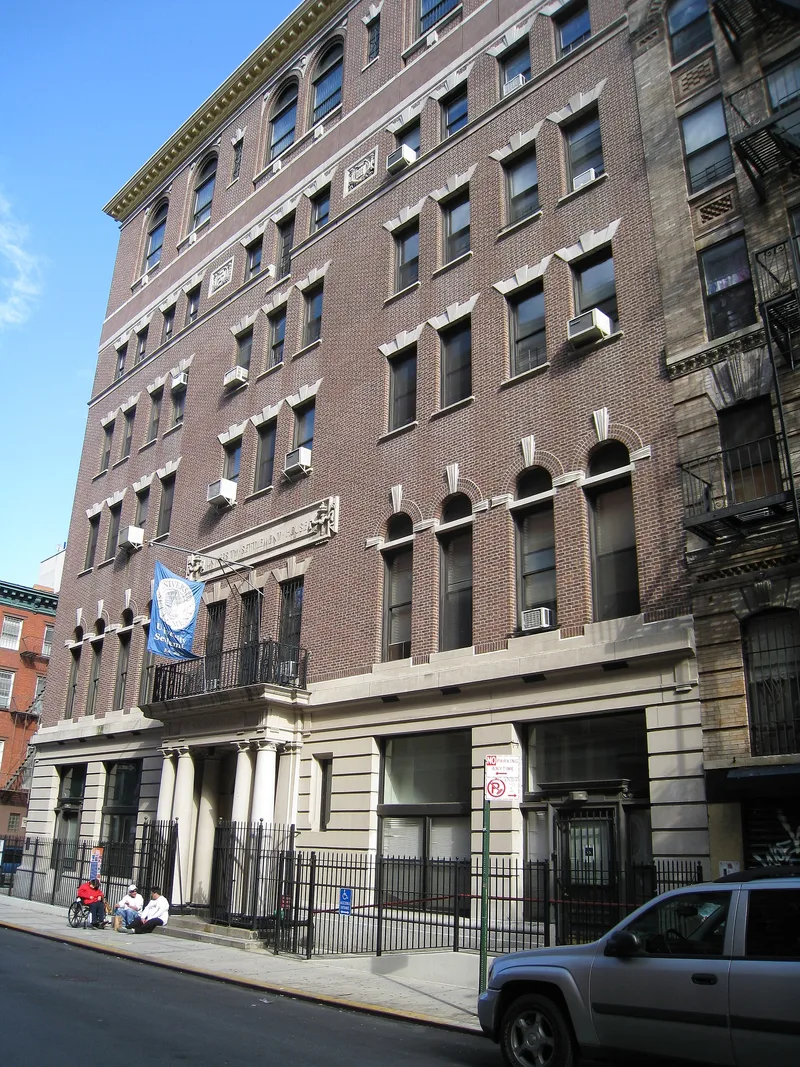
Standing at the corner of Eldridge and Rivington Streets on Manhattan's Lower East Side, this six-story red brick building was erected in 1898 specifically for the University Settlement Society. Its restrained Classical Revival design features a rusticated cast-stone ground floor, a Doric portico inscribed "Neighborhood Guild," and a two-story gymnasium added in 1904. The society began in 1886 as the Lily Pleasure Club, founded by Stanton Coit after a visit to Toynbee Hall in London, and became the first American settlement modeled on that English example. Staffed largely by college students and graduates, it served a dense immigrant population. Its work included the country's first kindergarten, public baths, support for trade unions, and political and mayoral reform campaigns. Charles Stover, a long-serving head worker, later became New York's Park Commissioner. The society is described as the oldest continuously operating settlement society in the United States and still provides social services nearby.
Significance in brief: The nomination argues it is significant for its association with the first settlement society established in the United States. The society pioneered social reform work on the Lower East Side, including kindergartens, public baths, labor organizing and municipal reform campaigns. It is described as the oldest continuously operating settlement society in the country.
Machine-generated summary. This summary was generated by a language model from the official nomination document and has not been reviewed line by line by an editor. It may contain errors. Check the source document before relying on any detail. Source: nomination document (PDF) · National Archives catalog entry. NRHP reference 86002515, listed September 11, 1986. Summary generated October 2026 (model claude-sonnet-5-5, prompt v1.0-2026-10-29, confidence medium).
Key facts
| Address | 184 Eldridge St., New York |
|---|---|
| County | Manhattan |
| Listed | September 11, 1986 |
| Reference number | 86002515 |
| Resource type | Building |
| Period of significance | 1898-1936 |
| Architect / builder | Harry Fischel (original building); Harry Baum (1904 addition) |
| Architectural style | Classical Revival |
| Areas of significance | Social History |
| Level of significance | Local |
| Status (as stated in the nomination) | Occupied and in good condition; the building is still used as a settlement house, though the interior has been altered and the cornice and a balcony have been removed. |
| Acreage | 0.9 |
| Coordinates | 40.72052, -73.99045 (NPS GIS) |
What listing means for this property
For a publicly owned building or structure, listing mainly matters when federal funds, permits or licences are involved: projects then go through Section 106 review so effects on the property are considered. Listing also strengthens applications for preservation grants and, for leased income-producing uses, can enable the federal rehabilitation tax credit.
General information, not legal or tax advice. Rules change; confirm with your State Historic Preservation Office or a qualified adviser.
Sources and further reading
- National Park Service, National Register of Historic Places database (snapshot May 2026), reference 86002515.
- Nomination form (PDF, National Archives) — catalog entry
- Wikipedia article (used for cross-checking only; text not reproduced here)
- Wikidata Q389293
- This listing as JSON
Last updated October 2026. Found an error? See the editorial policy for how to report it.