Apollo Theater

Why it's listed
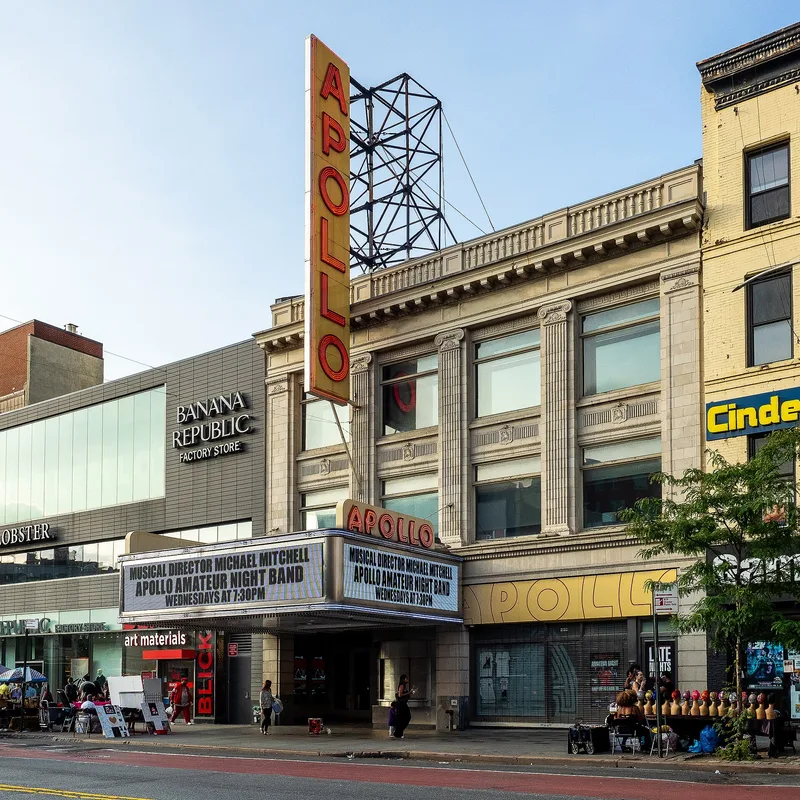
Located on 125th Street in the heart of Harlem, the Apollo Theater was completed in 1914 as Hurtig and Seamon's New Theater, a burlesque house designed by prominent theater architect George Keister. Its white terra-cotta facade is divided by five colossal pilasters with Tuscan and Ionic capitals. Inside, a 1700-seat auditorium has a proscenium arch, flanking boxes and classically inspired plaster ornament. It is one of the few New York theaters with two balconies. Burlesque ended in 1934, and in 1935 new owners renamed the building the Apollo and introduced a variety format featuring leading black entertainers. For about four decades it showcased comedy, gospel, blues, jazz, swing, rhythm and blues and soul, helping launch careers and contributing to Harlem's emergence as a major cultural center for black Americans. Live shows ended in the mid-1970s, followed by movie screenings and a period of vacancy. The interior retains much of its original character despite renovations between the 1930s and 1970s.
Significance in brief: The nomination argues the Apollo was one of New York's and the nation's leading entertainment centers for over four decades. It began as a burlesque house and from 1935 became the premier stage for black American performers, contributing to Harlem's growth as a black cultural center. Its largely intact neoclassical interior provides associations with its theater history.
Machine-generated summary. This summary was generated by a language model from the official nomination document and has not been reviewed line by line by an editor. It may contain errors. Check the source document before relying on any detail. Source: nomination document (PDF) · National Archives catalog entry. NRHP reference 83004059, listed November 17, 1983. Summary generated October 2026 (model claude-sonnet-5-5, prompt v1.0-2026-10-29, confidence high).
Key facts
| Address | 253 W. 125th St., New York |
|---|---|
| County | Manhattan |
| Listed | November 17, 1983 |
| Reference number | 83004059 |
| Resource type | Building |
| Period of significance | 1900- |
| Architect / builder | George Keister |
| Architectural style | Neoclassical |
| Criteria |
|
| Areas of significance | Architecture, Performing Arts |
| Level of significance | National |
| Status (as stated in the nomination) | The form says live entertainment ended in the mid-1970s, after which the building had a mixed history including use as a movie theater, years standing vacant, and sale to the Harlem Urban Development Corporation. It was marked occupied at the time of nomination. |
| Acreage | 0.4 |
| Coordinates | 40.81015, -73.94973 (NPS GIS) |
What listing means for this property
For an income-producing building, listing (individually or as a contributing building in a district) is the gateway to the 20% federal rehabilitation tax credit on qualified rehabilitation costs, often stackable with state credits. Work claiming the credit must follow the Secretary of the Interior's Standards and be approved in advance.
Listing does not restrict a private owner acting without federal money or permits; where federal funding or licensing is involved, Section 106 review applies.
General information, not legal or tax advice. Rules change; confirm with your State Historic Preservation Office or a qualified adviser.
Sources and further reading
- National Park Service, National Register of Historic Places database (snapshot May 2026), reference 83004059.
- Nomination form (PDF, National Archives) — catalog entry
- Wikipedia article (used for cross-checking only; text not reproduced here)
- Wikidata Q619124
- This listing as JSON
Last updated October 2026. Found an error? See the editorial policy for how to report it.