Stone Farmhouse

Why it's listed
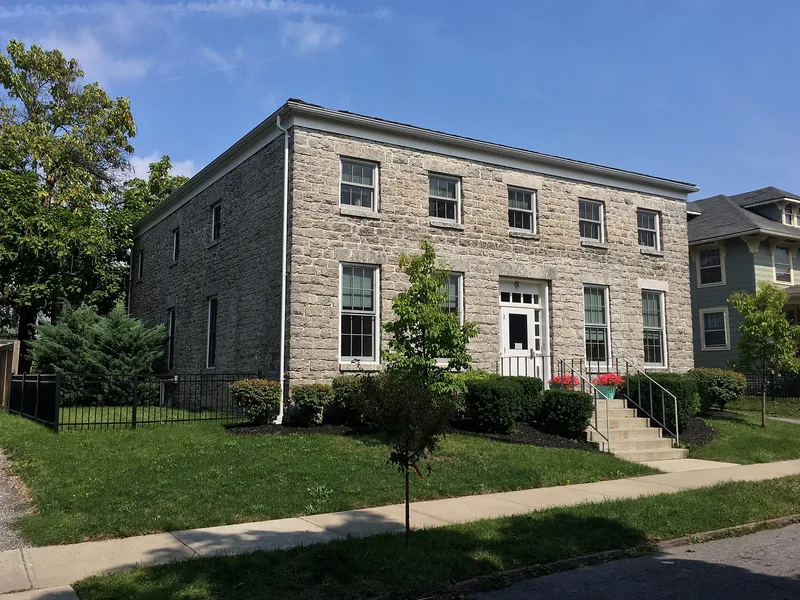
Built between about 1830 and 1850, this limestone farmhouse at 60 Hedley Place is the oldest surviving building in Buffalo's Hamlin Park neighborhood. It began as a farm residence on the northern outskirts of the young city and now sits among early twentieth-century frame houses. The two-story, hipped-roof house has a five-bay symmetrical facade of rock-faced ashlar, while the sides and rear are coursed rubble, showing the builder's attention to hierarchy. Inside, a central stair hall, double parlors and shouldered trim reflect Greek Revival influence blended with vernacular tradition. It is one of only a few early stone buildings left in the city. Owners over time included merchants, a Catholic bishop, the Sisters of Charity, who ran an orphan asylum nearby, and naturalist William Temple Hornaday. The Olson family held it for 76 years. Long vacant and badly deteriorated, it retains enough original design and materials to convey its character, and it was designated a local landmark in 1992.
Significance in brief: The nomination argues the house is significant under Criterion C as a rare surviving example of early nineteenth-century stone construction in Buffalo. It combines local vernacular building traditions with Greek Revival elements, and it reflects the city's growth from rural outskirts to dense urban neighborhood. It is also linked to several prominent Buffalonians who owned the property.
Machine-generated summary. This summary was generated by a language model from the official nomination document and has not been reviewed line by line by an editor. It may contain errors. Check the source document before relying on any detail. Source: nomination document (PDF) · National Archives catalog entry. NRHP reference 98001614, listed February 1, 1999. Summary generated October 2026 (model claude-sonnet-5-5, prompt v1.0-2026-10-29, confidence high).
Key facts
| Address | 60 Hedley Pl., Buffalo |
|---|---|
| County | Erie County |
| Listed | February 1, 1999 |
| Reference number | 98001614 |
| Resource type | Building |
| Period of significance | Ca. 1830-Ca. 1900 |
| Architectural style | Mid-19th century/vernacular Greek Revival |
| Criteria |
|
| Areas of significance | Architecture, Community Planning and Development |
| Level of significance | Local |
| Status (as stated in the nomination) | Vacant for about 10 years and in severe deterioration, with roof leaks and partial collapse of upper floors; deeded to the City of Buffalo in 1998. |
| Acreage | 0.9 |
| Coordinates | 42.92334, -78.85109 (NPS GIS) |
What listing means for this property
National Register listing is honorary: it recognises significance and does not restrict what a private owner may do without federal money or permits. It unlocks the 20% federal rehabilitation tax credit for income-producing buildings, state credits in many states, and Section 106 review when federal agencies are involved. See what listing means in practice.
Noted as vacant in the nomination. Nomination documents can be decades old; current status may differ. If you are considering buying an empty listed property, read the due-diligence checklist.
General information, not legal or tax advice. Rules change; confirm with your State Historic Preservation Office or a qualified adviser.
Sources and further reading
- National Park Service, National Register of Historic Places database (snapshot May 2026), reference 98001614.
- Nomination form (PDF, National Archives) — catalog entry
- Wikipedia article (used for cross-checking only; text not reproduced here)
- Wikidata Q7618930
- This listing as JSON
Last updated October 2026. Found an error? See the editorial policy for how to report it.