Tubman, Harriet, House

Why it's listed
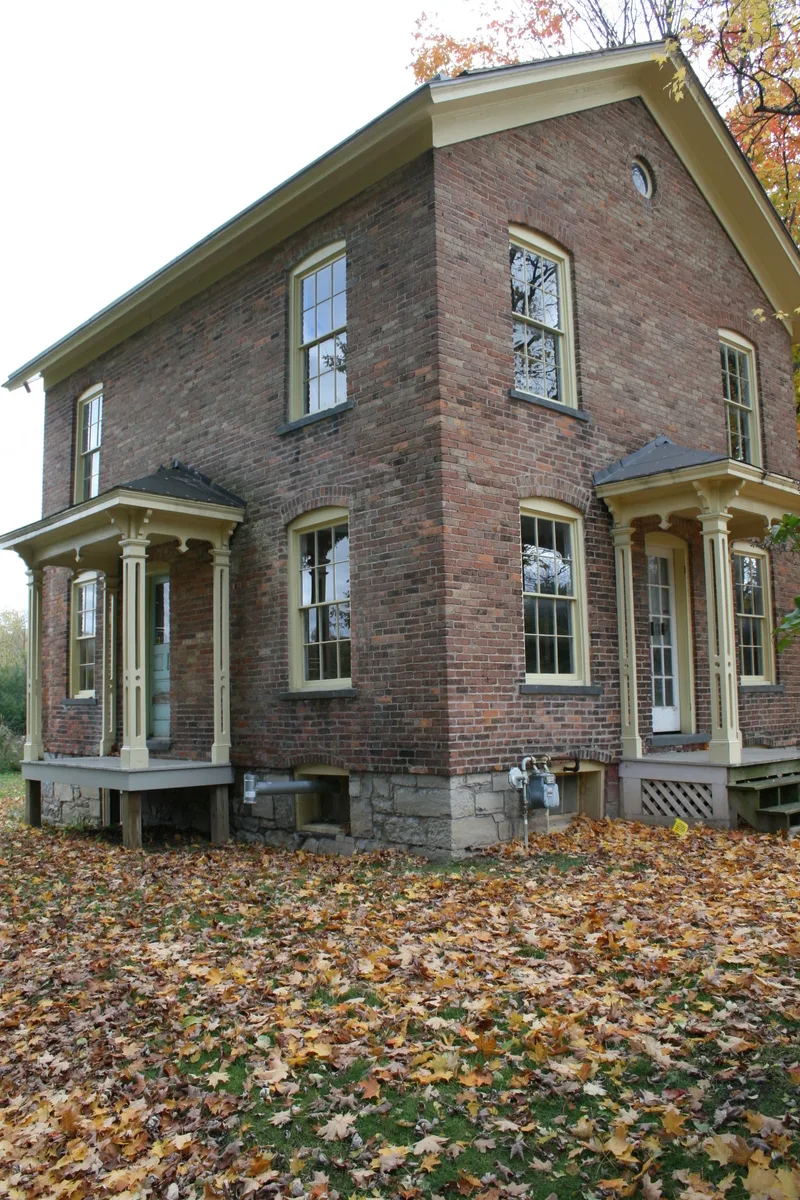
This simple two-story brick house at 182 South Street in Auburn, New York, was the home of Harriet Tubman for the last decades of her life. She contracted in 1859 to buy the house and seven acres from William Henry Seward, and she held the land until her death in 1913. The present brick house was most likely built in the mid to late 1880s, when she wanted to house more aged and infirm people; it replaced an earlier frame house. Plain in design, it has a gabled front, shallow relieving arches over the windows, and later frame additions. A rear garage includes a former barn from her small farm. After 1911 she moved to the nearby church-run Home for the Aged. Her heirs sold the house in 1914, and its identity as her residence was forgotten until 1990. It was listed for its direct connection to her life and work, with a period of significance of about 1886 to 1913.
Significance in brief: The house is the site most closely tied to Harriet Tubman, who lived here and cared for family members and aged and indigent African Americans. It is linked to her through the land purchase from William Henry Seward and her plans for a home for the aged. It was listed under Criterion B for its association with her.
Machine-generated summary. This summary was generated by a language model from the official nomination document and has not been reviewed line by line by an editor. It may contain errors. Check the source document before relying on any detail. Source: nomination document (PDF) · National Archives catalog entry. NRHP reference 99000347, listed April 2, 1999. Summary generated October 2026 (model claude-sonnet-5-5, prompt v1.0-2026-10-29, confidence high).
Key facts
| Address | 182 South St., Auburn |
|---|---|
| County | Cayuga County |
| Listed | April 2, 1999 |
| Reference number | 99000347 |
| Resource type | Building |
| Period of significance | c.1886-1913 (amended from the 1859-1913 stated in the form) |
| Architectural style | Late Victorian |
| Criteria |
|
| Areas of significance | Black, Social History |
| Level of significance | National |
| Status (as stated in the nomination) | Historic and current function is single dwelling; the interior has been extensively altered and the original open side porch was replaced by an enclosed porch, probably in the 1920s. |
| Acreage | 5.2 |
| Coordinates | 42.91161, -76.56179 (NPS GIS) |
What listing means for this property
National Register listing is honorary for a privately owned home: it does not by itself restrict what an owner may do with their own money, and it does not require public access. Restrictions come from local landmark or historic-district ordinances, which are separate (how they differ).
Owner-occupied houses are not eligible for the 20% federal rehabilitation tax credit, which applies to income-producing buildings, but many states offer credits for homeowners. Listing also opens the door to preservation easements and to buying a plaque. Start with what listing means for homeowners, renovating a listed house and selling one.
General information, not legal or tax advice. Rules change; confirm with your State Historic Preservation Office or a qualified adviser.
Sources and further reading
- National Park Service, National Register of Historic Places database (snapshot May 2026), reference 99000347.
- Nomination form (PDF, National Archives) — catalog entry
- Wikidata Q141450702
- This listing as JSON
Last updated October 2026. Found an error? See the editorial policy for how to report it.