Old North Church
Also known as: Christ Church Episcopal
Old North Church is a building in Boston, Suffolk County, Massachusetts, listed on the National Register of Historic Places on October 15, 1966 (reference number 66000776). It is also a National Historic Landmark, designated January 20, 1961. The National Park Service records its significance in Military and Architecture at the national level.
Facts from the NPS National Register database (); nomination summary October 2026. Last updated . Sources for each fact.

The pin is a point inside the NPS boundary polygon, not a surveyed location.
Why it's listed
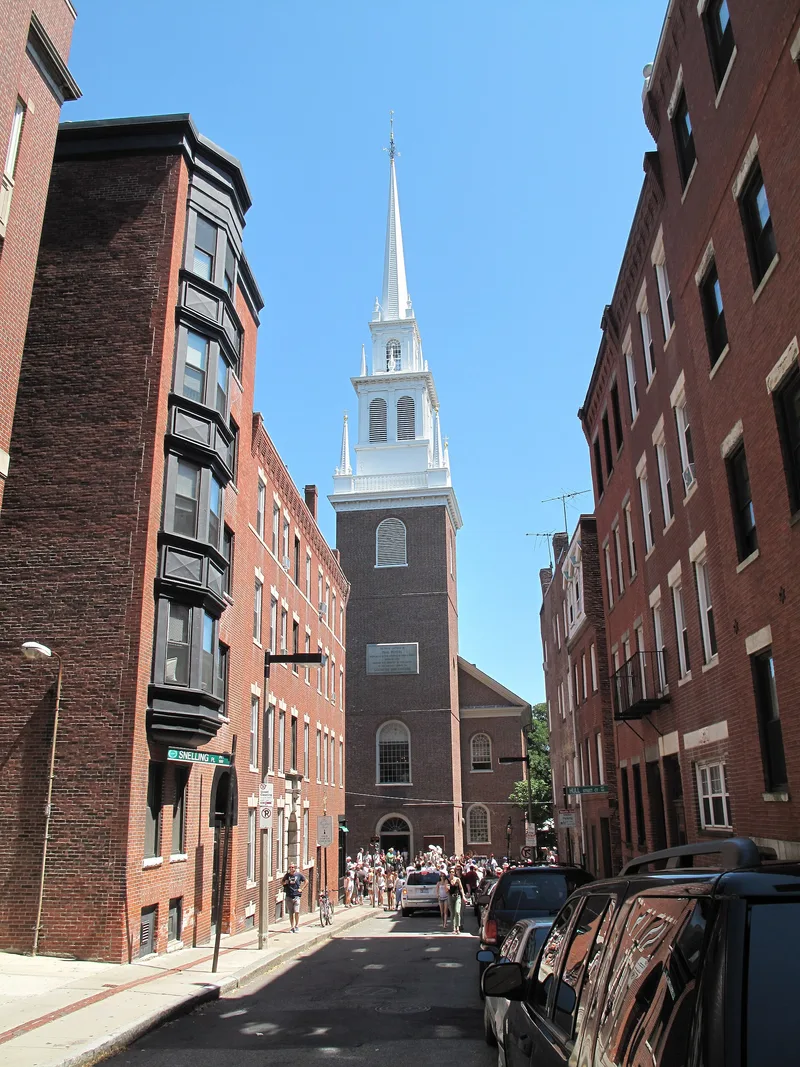
Old North Church, at 191 Salem Street in Boston's North End, is a brick church begun in 1723 on land near the crown of Copp's Hill. William Price, a Boston book and print dealer, designed it, drawing on Christopher Wren's London churches. It was the first building in the English colonies to fully take on the Wren or Georgian form, with a tall front tower and spire, an oblong interior, and longitudinal aisles between box pews. The wooden spire, finished in 1740, was blown down in 1804 and again toppled in 1954, and each time it was replaced. The church is also known for April 18, 1775, when sexton Robert Newman hung two lanterns in the spire to warn patriots across the Charles River that British troops were moving out by water. The church was restored in 1912-14. The complex also includes a vicarage, an Italian chapel built in 1918, and the c. 1715 Clough House. Visitors are welcome daily, and services continue.
Significance in brief: The church is Boston's oldest surviving church and the first building in the English colonies to fully take on the Wren or Georgian church form, with a front tower and spire, an oblong auditorium and box pews. It is also where two lanterns were hung in the spire on April 18, 1775, to signal the British troop movement by water before Lexington and Concord.
Machine-generated summary. This summary was generated by a language model from the official nomination document and has not been reviewed line by line by an editor. It may contain errors. Check the source document before relying on any detail. Source: nomination document (PDF) · National Archives catalog entry. NRHP reference 66000776, listed October 15, 1966. Summary generated October 2026 (model claude-sonnet-5-5, prompt v1.0-2026-10-29, confidence high).
Key facts
| Official database NPS National Register database, ref. 66000776 , checked | |
|---|---|
| Address | 193 Salem St., Boston |
| County | Suffolk County |
| Listed | October 15, 1966 |
| Reference number | 66000776 |
| Resource type | Building |
| Areas of significance | Military, Architecture |
| Level of significance | National |
| National Historic Landmark | Yes, designated January 20, 1961 |
| Acreage | 0.9 |
| Official document, machine-extracted Nomination form (National Archives) , checked | |
| Period of significance | 1723-1740; 1775 |
| Architect / builder | William Price; restoration, Sturgis and Ross |
| Architectural style | Wren or Georgian type church |
| Status (as stated in the nomination) | Well maintained since its 1912-14 restoration; open to the public daily and used for regular Sunday services. The adjoining Clough House serves as a parish hall. |
| Official dataset NPS cultural-resource GIS (NRHP locations) | |
| Coordinates | 42.36629, -71.05450 |
| Computed Computed from NPS GIS district boundaries | |
| Within district | Boston National Historical Park |
What listing means for this property
Religious properties are listed for their architectural or historical significance, not their religious use. Listing is honorary and does not restrict the congregation's use of the building. The federal rehabilitation credit is generally unavailable unless part of the building is income-producing; some state programmes and preservation grants do cover religious buildings. Federal funding or permits trigger Section 106 review.
General information, not legal or tax advice. Rules change; confirm with your State Historic Preservation Office or a qualified adviser.
Questions about Old North Church
When was Old North Church added to the National Register of Historic Places?
Old North Church was listed on October 15, 1966. Its National Register reference number is 66000776.
Is Old North Church a National Historic Landmark?
Yes. Old North Church is a National Historic Landmark, designated January 20, 1961, in addition to being listed on the National Register.
Where is Old North Church?
193 Salem St., Boston, Suffolk County, Massachusetts; coordinates 42.36629, -71.05450.
Why is Old North Church historically significant?
According to a machine-generated summary of its nomination form: The church is Boston's oldest surviving church and the first building in the English colonies to fully take on the Wren or Georgian church form, with a front tower and spire, an oblong auditorium and box pews. It is also where two lanterns were hung in the spire on April 18, 1775, to signal the British troop movement by water before Lexington and Concord. Check the nomination document before relying on any detail.
Who designed or built Old North Church?
The nomination form names William Price; restoration, Sturgis and Ross as architect or builder (extracted by machine from the nomination; check the source document).
Is Old North Church in a historic district?
Yes. Its location falls within the Boston National Historical Park, itself listed on the National Register. (Computed from National Park Service boundary data; the district nomination's own list of contributing resources may differ.)
Where can I read the original nomination for Old North Church?
The nomination form is a public record held by the National Archives: nomination document (PDF).
Sources and further reading
- National Park Service, National Register of Historic Places database (snapshot May 2026), reference 66000776.
- Nomination form (PDF, National Archives) — catalog entry
- Wikipedia article (used for cross-checking only; text not reproduced here)
- Wikidata Q1321240
- This listing as JSON
Last updated November 2026. Found an error? See the editorial policy for how to report it.