Brook Farm

Why it's listed
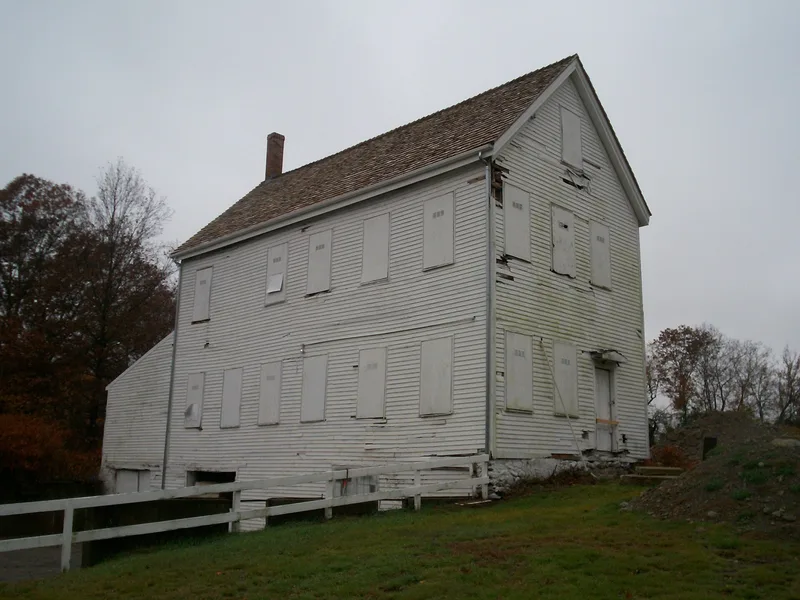
Brook Farm occupies land on Baker Street in West Roxbury, Boston, where a communal experiment ran from 1841 to 1847. Led by former Unitarian minister George Ripley, the Brook Farm Institute for Agriculture and Education combined farming with a well-regarded school. Members were paid equally for physical or mental work, and the community published a weekly magazine, The Harbinger. Nathaniel Hawthorne and Charles A. Dana were shareholders, and Ralph Waldo Emerson and Margaret Fuller were among its visitors. A fire destroyed the planned central building, the Phalanstery, in 1846, and the community ended the next year. The land later served as a poor farm, a Civil War camp, an orphanage and, from 1873, Gethsemane Cemetery. By the time of the form, the grounds had changed considerably and only one small cottage was definitely known to date from the community's years. The place was recognised for its lasting role in American social history and its link to leading writers of the period.
Significance in brief: The community was one of many experiments in communal living in the first half of the 19th century. It is better known than most because of the literary figures and intellectual leaders tied to it, including Ripley, Nathaniel Hawthorne, Charles A. Dana and Margaret Fuller. It was noted for its progressive school and for its magazine, The Harbinger.
Machine-generated summary. This summary was generated by a language model from the official nomination document and has not been reviewed line by line by an editor. It may contain errors. Check the source document before relying on any detail. Source: nomination document (PDF) · National Archives catalog entry. NRHP reference 66000141, listed October 15, 1966. Summary generated October 2026 (model claude-sonnet-5-5, prompt v1.0-2026-10-29, confidence medium).
Key facts
| Address | 670 Baker St., Boston |
|---|---|
| County | Suffolk County |
| Listed | October 15, 1966 |
| Reference number | 66000141 |
| Resource type | Site |
| Period of significance | 1841-47 |
| Areas of significance | Social History |
| Level of significance | National |
| National Historic Landmark | Yes, designated July 23, 1965 |
| Status (as stated in the nomination) | At the time of the form, the land was largely natural but altered by Gethsemane Cemetery, which remained in active use. The former orphanage was vacant, and the Margaret Fuller Cottage was in poor condition. Later clippings report the cottage destroyed by fire in 1985. |
| Acreage | 180 |
| Coordinates | 42.28701, -71.17835 (NPS GIS) |
What listing means for this property
Sites (archaeological sites, battlefields, landscapes) are often listed with a restricted address to protect them from looting or disturbance. Listing is honorary for private owners; federal undertakings on or near the site go through Section 106 review, and state laws may protect burials and artefacts regardless of listing.
General information, not legal or tax advice. Rules change; confirm with your State Historic Preservation Office or a qualified adviser.
Sources and further reading
- National Park Service, National Register of Historic Places database (snapshot May 2026), reference 66000141.
- Nomination form (PDF, National Archives) — catalog entry
- Wikipedia article (used for cross-checking only; text not reproduced here)
- Wikidata Q928662
- This listing as JSON
Last updated October 2026. Found an error? See the editorial policy for how to report it.