Old Hose House

Why it's listed
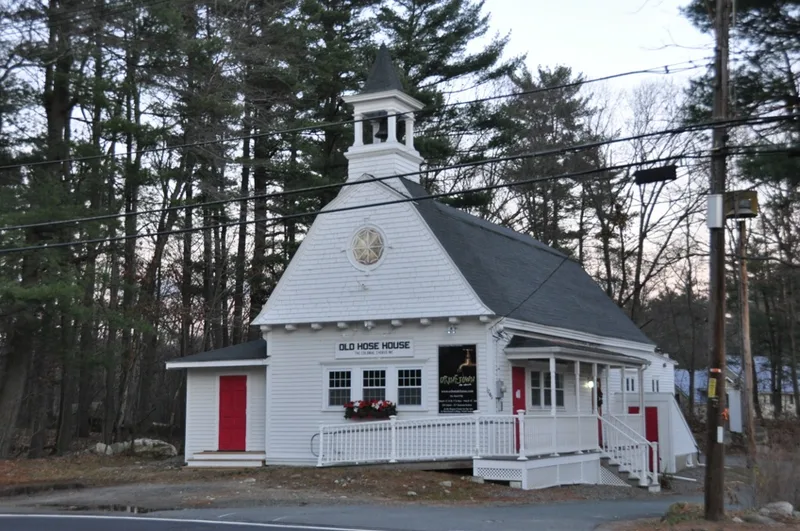
Built in 1902 at 1249 Main Street, this small fire-hose house served Reading's northern fire protection branch. The town bought the site for $10 and erected the building for $1,180.50. A tower with a bell from the John Street School and an alarm striker was added in 1904. The design follows the Colonial Revival style, then popular for houses in Reading, giving the public building a domestic scale. Features include a flared gambrel roof, a lunette gable window, and a triple window with wide surrounds. A bracketed gable overhang may be a Queen Anne remnant or an allusion to colonial garrison overhangs. The building reflects the town's volunteer fire system, which began in 1815 with its first hand engine. In 1930 it was sold to the Northern Residents' Association, which used it for inexpensive entertainment during the Depression. Since 1972 a local chorus has owned it as a meeting and rehearsal space. It was listed for its role in local fire protection and its architecture.
Significance in brief: The building is significant for its role in the development of Reading's fire-fighting capabilities and as an example of a small public building given domestic-style architectural treatment. It retains integrity of location, design, setting, materials, workmanship and feeling.
Machine-generated summary. This summary was generated by a language model from the official nomination document and has not been reviewed line by line by an editor. It may contain errors. Check the source document before relying on any detail. Source: nomination document (PDF) · National Archives catalog entry. NRHP reference 84002769, listed July 19, 1984. Summary generated October 2026 (model claude-sonnet-5-5, prompt v1.0-2026-10-29, confidence high).
Key facts
| Address | 1249 Main St., Reading |
|---|---|
| County | Middlesex County |
| Listed | July 19, 1984 |
| Reference number | 84002769 |
| Resource type | Building |
| Architectural style | Colonial Revival |
| Criteria |
|
| Areas of significance | Community Planning and Development, Architecture |
| Level of significance | Local |
| Status (as stated in the nomination) | Now used as a meeting and rehearsal space by a local chorus, which has owned it since 1972. |
| Acreage | 0.5 |
| Coordinates | 42.55012, -71.10413 (NPS GIS) |
What listing means for this property
National Register listing is honorary for a privately owned home: it does not by itself restrict what an owner may do with their own money, and it does not require public access. Restrictions come from local landmark or historic-district ordinances, which are separate (how they differ).
Owner-occupied houses are not eligible for the 20% federal rehabilitation tax credit, which applies to income-producing buildings, but many states offer credits for homeowners. Listing also opens the door to preservation easements and to buying a plaque. Start with what listing means for homeowners, renovating a listed house and selling one.
General information, not legal or tax advice. Rules change; confirm with your State Historic Preservation Office or a qualified adviser.
Sources and further reading
- National Park Service, National Register of Historic Places database (snapshot May 2026), reference 84002769.
- Nomination form (PDF, National Archives) — catalog entry
- Wikipedia article (used for cross-checking only; text not reproduced here)
- Wikidata Q7084243
- This listing as JSON
Last updated October 2026. Found an error? See the editorial policy for how to report it.