Summer Street Historic District

Why it's listed
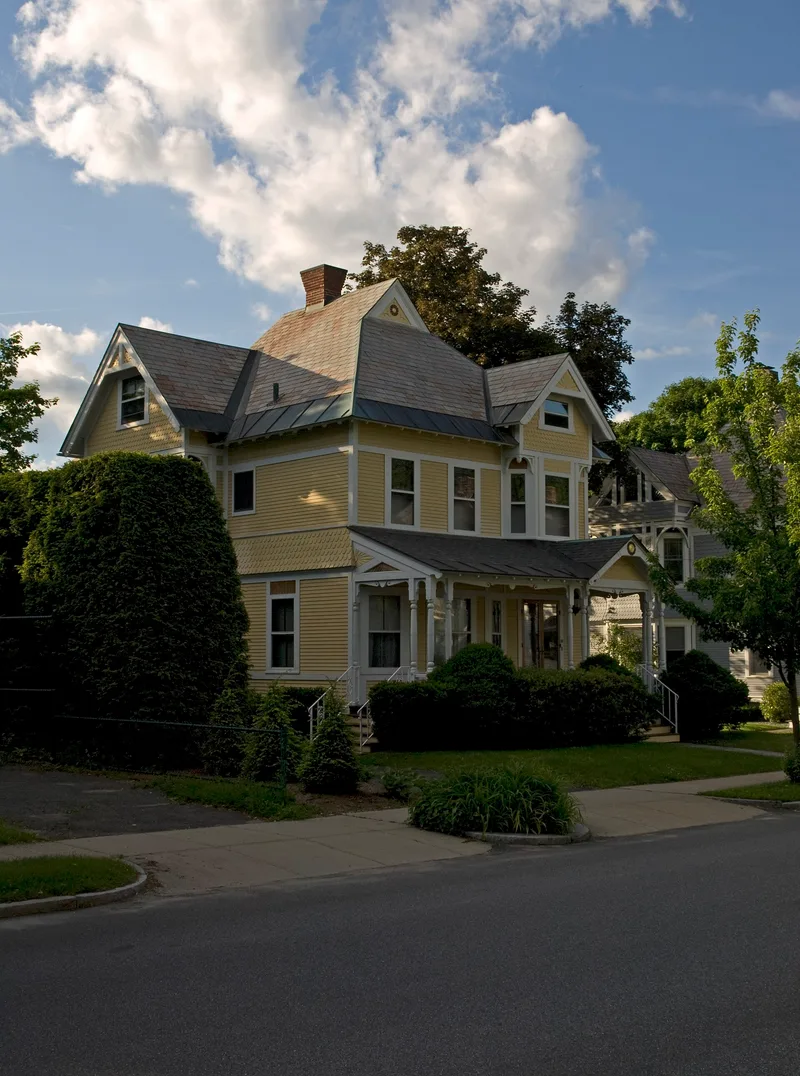
Summer Street Historic District occupies about 27 acres on the edge of downtown Adams, Massachusetts. Its 78 buildings are mostly nineteenth-century single-family houses, with several rowhouse blocks and two brick churches, now fraternal lodges, marking the entrance on Center Street. Only three buildings, late twentieth-century houses on Crandall Street, do not contribute. Greek Revival houses from the 1830s to 1850s sit alongside Italianate, Second Empire and many Queen Anne houses, most built between 1885 and 1895. The neighborhood grew as Adams shifted from farming to milling. Merchants such as Dallas J. Dean and the Smith brothers settled here, and mill owners and managers from the paper and textile firms followed, including James Renfrew, Jr. Local carpenters and builders such as the Richmonds and the Flemmings shaped much of the development. Rowhouses housed young mill executives. The district retains its tree-lined streets, outbuildings and a high potential for archaeological remains.
Significance in brief: The district is a well-preserved nineteenth-century neighborhood with very few intrusions, and its houses mainly represent the Greek Revival and Queen Anne styles. It was home to many of Adams' leading merchants and to owners and senior employees of the textile and paper mills central to the town's economy. The nomination cites criteria A, B and C at the local level.
Machine-generated summary. This summary was generated by a language model from the official nomination document and has not been reviewed line by line by an editor. It may contain errors. Check the source document before relying on any detail. Source: nomination document (PDF) · National Archives catalog entry. NRHP reference 85002009, listed September 5, 1985. Summary generated October 2026 (model claude-sonnet-5-5, prompt v1.0-2026-10-29, confidence high).
Key facts
| Address | Crandall, Center, East, Liberty, Orchard and Summer Sts., Adams |
|---|---|
| County | Berkshire County |
| Listed | September 5, 1985 |
| Reference number | 85002009 |
| Resource type | District |
| Architect / builder | various architects |
| Architectural style | Greek Revival and Queen Anne, with Federal, Italianate, Second Empire, Stick, Shingle, Romanesque Revival and Gothic Revival examples |
| Criteria |
|
| Areas of significance | Industry, Commerce, Architecture |
| Level of significance | Local |
| Status (as stated in the nomination) | Condition is rated excellent. Most buildings are residential, and the two churches now serve as fraternal lodges. A funeral home operates in a former residence. |
| Acreage | 35 |
| Coordinates | 42.61898, -73.11565 (NPS GIS) |
What listing means for this property
This is a historic district. Buildings within its boundary are either contributing (they add to the district's significance) or non-contributing. Owners of contributing income-producing buildings can claim the 20% federal rehabilitation tax credit; homeowners should look at state credits. National Register districts impose no design review by themselves; a local historic district ordinance, if one exists, does (the difference explained).
General information, not legal or tax advice. Rules change; confirm with your State Historic Preservation Office or a qualified adviser.
Sources and further reading
- National Park Service, National Register of Historic Places database (snapshot May 2026), reference 85002009.
- Nomination form (PDF, National Archives) — catalog entry
- Wikipedia article (used for cross-checking only; text not reproduced here)
- Wikidata Q7637456
- This listing as JSON
Last updated October 2026. Found an error? See the editorial policy for how to report it.