Pennsylvania Avenue Historic District

Why it's listed
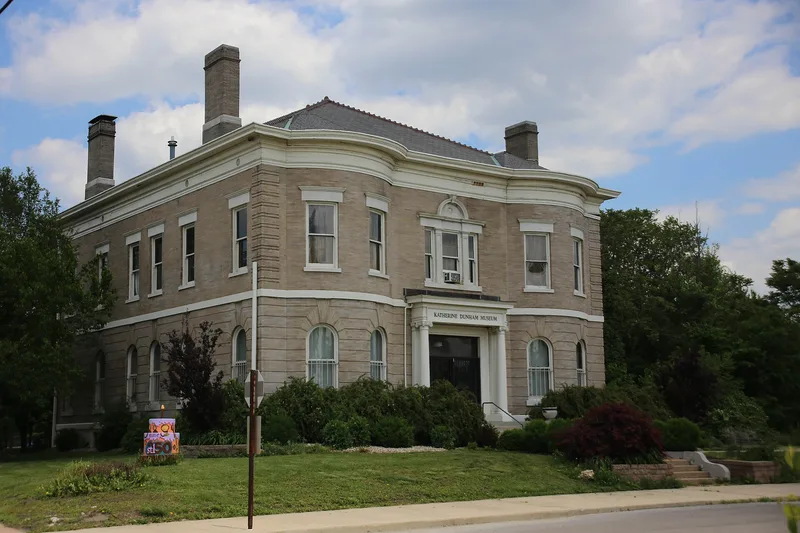
Four houses on the 1000 block of Pennsylvania Avenue in East St. Louis, Illinois, survive from what was once called 'Quality Hill,' a small enclave for the city's turn-of-the-century elite. Built between 1896 and 1907, they include the Renaissance Revival Joyce House, the Georgian Revival Stephens House, the Midwestern vernacular Fekete House and the Queen Anne Campbell House, designed by local architect Albert B. Frankel. Residents included mayors Malburn Stephens and Maurice Joyce, city attorneys, a postmaster who became an aide to Governor Richard Yates, and livestock commission merchants. Many business leaders in this industrial city lived elsewhere, which makes this block unusual. After the 1917 race riots, the neighborhood declined along with the city. Houses were converted to institutional use or rented, and two were demolished in 1962 and 1976. Today the Joyce House serves as a museum, while the others stand vacant, though restoration of the Campbell House is under way.
Significance in brief: The block was the home of East St. Louis's turn-of-the-century political and business elite, including mayors, city attorneys and a postmaster. Its houses show late nineteenth and early twentieth century styles. Its decline after the 1917 race riots mirrors the fate of the city as a whole.
Machine-generated summary. This summary was generated by a language model from the official nomination document and has not been reviewed line by line by an editor. It may contain errors. Check the source document before relying on any detail. Source: nomination document (PDF) · National Archives catalog entry. NRHP reference 79003166, listed July 27, 1979. Summary generated October 2026 (model claude-sonnet-5-5, prompt v1.0-2026-10-29, confidence medium).
Key facts
| Address | Pennsylvania Ave., East St. Louis |
|---|---|
| County | St. Clair County |
| Listed | July 27, 1979 |
| Reference number | 79003166 |
| Resource type | District |
| Period of significance | 1896-1945 |
| Architect / builder | Albert B. Frankel (architect of the Campbell House and the demolished Derleth-McLean House); builders or architects of the other houses unknown |
| Architectural style | Renaissance Revival, Georgian Revival, Queen Anne, and Midwestern vernacular |
| Areas of significance | Politics/Government, Architecture |
| Level of significance | Local |
| Status (as stated in the nomination) | All structures except the Joyce House at 1005 Pennsylvania Avenue (a museum/cultural center) are vacant. The Stephens House is deteriorated, with fire damage to the roof. The Fekete House has lost its porch, doors, windows and interior trim. The Campbell House is being restored. |
| Acreage | 2.9 |
| Coordinates | 38.62831, -90.14435 (NPS GIS) |
What listing means for this property
This is a historic district. Buildings within its boundary are either contributing (they add to the district's significance) or non-contributing. Owners of contributing income-producing buildings can claim the 20% federal rehabilitation tax credit; homeowners should look at state credits. National Register districts impose no design review by themselves; a local historic district ordinance, if one exists, does (the difference explained).
Noted as vacant in the nomination. Nomination documents can be decades old; current status may differ. If you are considering buying an empty listed property, read the due-diligence checklist.
General information, not legal or tax advice. Rules change; confirm with your State Historic Preservation Office or a qualified adviser.
Sources and further reading
- National Park Service, National Register of Historic Places database (snapshot May 2026), reference 79003166.
- Nomination form (PDF, National Archives) — catalog entry
- Wikipedia article (used for cross-checking only; text not reproduced here)
- Wikidata Q16898188
- This listing as JSON
Last updated October 2026. Found an error? See the editorial policy for how to report it.