Lincoln Colored Home

Why it's listed
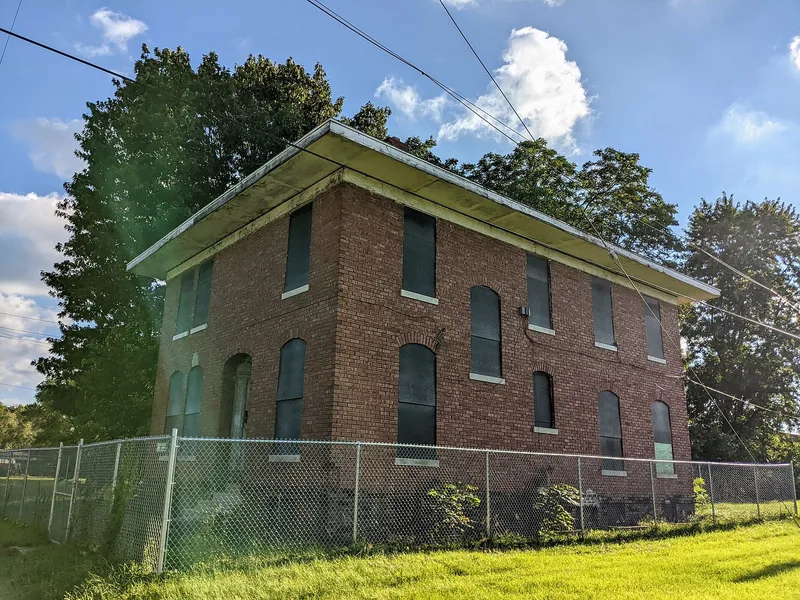
This two-story brick building at 427 South Twelfth Street in Springfield was built in 1904 as the Lincoln Colored Home, an orphanage and home for elderly African American residents. Eva Carroll Monroe began the work in 1896 after finding children on the street who were turned away by a whites-only orphanage. She opened the first home on this site in 1898. Mary Lawrence, the wife of a former mayor, helped secure the mortgage, raised funds, and donated brick, windows, doors and stained glass for the new house. The building has load-bearing brick walls three wythes thick, a low hipped roof, segmental arched windows, and a carved double entrance door. A 1915 state report lists the home as the earliest of the institutions caring for Black children in Illinois. It housed up to sixty children and hosted club meetings and public ceremonies until it closed as an orphanage in 1933. Today it is used for storage.
Significance in brief: The nomination argues the home is locally significant under Criterion A for social history, as a representative orphanage in the development of congregate child care in Illinois in the early 1900s. It is described as the first orphanage for African American children in Illinois. It was founded by Eva Carroll Monroe in 1898 with support from Mary Lawrence, and it served as a center of Black community activity until it ceased operating as an orphanage in 1933.
Machine-generated summary. This summary was generated by a language model from the official nomination document and has not been reviewed line by line by an editor. It may contain errors. Check the source document before relying on any detail. Source: nomination document (PDF) · National Archives catalog entry. NRHP reference 98000985, listed August 6, 1998. Summary generated October 2026 (model claude-sonnet-5-5, prompt v1.0-2026-10-29, confidence medium).
Key facts
| Address | 427 S. Twelfth St., Springfield |
|---|---|
| County | Sangamon County |
| Listed | August 6, 1998 |
| Reference number | 98000985 |
| Resource type | Building |
| Period of significance | 1904-1933 |
| Architectural style | Late 19th and Early 20th Century American Movements |
| Criteria |
|
| Areas of significance | Social History |
| Level of significance | Local |
| Status (as stated in the nomination) | The house is currently used for storage. Parts of the masonry need repointing but are in generally good condition, and the porch roof has disappeared. |
| Acreage | 0.9 |
| Coordinates | 39.79758, -89.63982 (NPS GIS) |
What listing means for this property
National Register listing is honorary for a privately owned home: it does not by itself restrict what an owner may do with their own money, and it does not require public access. Restrictions come from local landmark or historic-district ordinances, which are separate (how they differ).
Owner-occupied houses are not eligible for the 20% federal rehabilitation tax credit, which applies to income-producing buildings, but many states offer credits for homeowners. Listing also opens the door to preservation easements and to buying a plaque. Start with what listing means for homeowners, renovating a listed house and selling one.
General information, not legal or tax advice. Rules change; confirm with your State Historic Preservation Office or a qualified adviser.
Sources and further reading
- National Park Service, National Register of Historic Places database (snapshot May 2026), reference 98000985.
- Nomination form (PDF, National Archives) — catalog entry
- Wikipedia article (used for cross-checking only; text not reproduced here)
- Wikidata Q14687793
- This listing as JSON
Last updated October 2026. Found an error? See the editorial policy for how to report it.