Graham, Cong. James M., House

Why it's listed
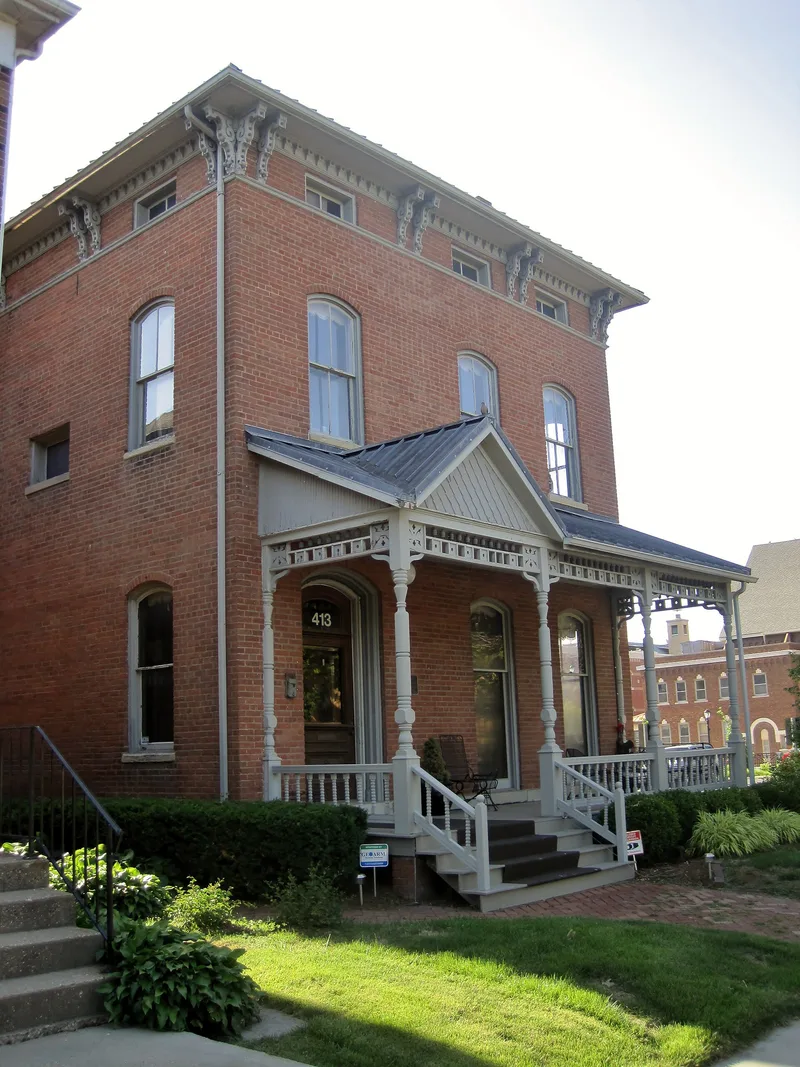
Built in 1862 near downtown Springfield, Illinois, this ten-room red brick house follows the Italianate style, with a truncated hip roof, deep bracketed eaves, flat-arched windows with limestone sills and a frame Queen Anne porch. Inside, carved and hand-grained woodwork, a curving main staircase, plaster medallions and several fireplaces remain largely intact. James M. Graham bought the house in the 1890s and lived there until his death in 1945. Family members stayed until 1977. Graham served in Congress from 1909 to 1915 and played a visible part in national debates of the Progressive era. He filed a lengthy minority report in the Ballinger-Pinchot investigation of the Interior Department, and he chaired inquiries into the Indian Bureau, including the White Earth Reservation land fraud hearings. The house was his residence throughout his congressional career. At the time of listing it was being rehabilitated for office use.
Significance in brief: The house is tied to Congressman James M. Graham, who lived there from 1896/1897 until his death in 1945 and served in the U.S. House from 1909 to 1915. He filed a minority report in the Ballinger-Pinchot investigation and chaired inquiries into the Indian Bureau, including the White Earth land fraud investigation.
Machine-generated summary. This summary was generated by a language model from the official nomination document and has not been reviewed line by line by an editor. It may contain errors. Check the source document before relying on any detail. Source: nomination document (PDF) · National Archives catalog entry. NRHP reference 89000342, listed May 1, 1989. Summary generated October 2026 (model claude-sonnet-5-5, prompt v1.0-2026-10-29, confidence medium).
Key facts
| Address | 413 S. 7th St., Springfield |
|---|---|
| County | Sangamon County |
| Listed | May 1, 1989 |
| Reference number | 89000342 |
| Resource type | Building |
| Period of significance | 1909-1915 |
| Architect / builder | Unknown |
| Architectural style | Late Victorian: Italianate |
| Criteria |
|
| Areas of significance | Politics/Government |
| Level of significance | State |
| Status (as stated in the nomination) | Being entirely rehabilitated at the time of nomination for use as offices. |
| Acreage | 0.2 |
| Coordinates | 39.79788, -89.64683 (NPS GIS) |
What listing means for this property
National Register listing is honorary for a privately owned home: it does not by itself restrict what an owner may do with their own money, and it does not require public access. Restrictions come from local landmark or historic-district ordinances, which are separate (how they differ).
Owner-occupied houses are not eligible for the 20% federal rehabilitation tax credit, which applies to income-producing buildings, but many states offer credits for homeowners. Listing also opens the door to preservation easements and to buying a plaque. Start with what listing means for homeowners, renovating a listed house and selling one.
General information, not legal or tax advice. Rules change; confirm with your State Historic Preservation Office or a qualified adviser.
Sources and further reading
- National Park Service, National Register of Historic Places database (snapshot May 2026), reference 89000342.
- Nomination form (PDF, National Archives) — catalog entry
- Wikipedia article (used for cross-checking only; text not reproduced here)
- Wikidata Q19462043
- This listing as JSON
Last updated October 2026. Found an error? See the editorial policy for how to report it.