Meadow Garden
Also known as: George Walton House

Why it's listed
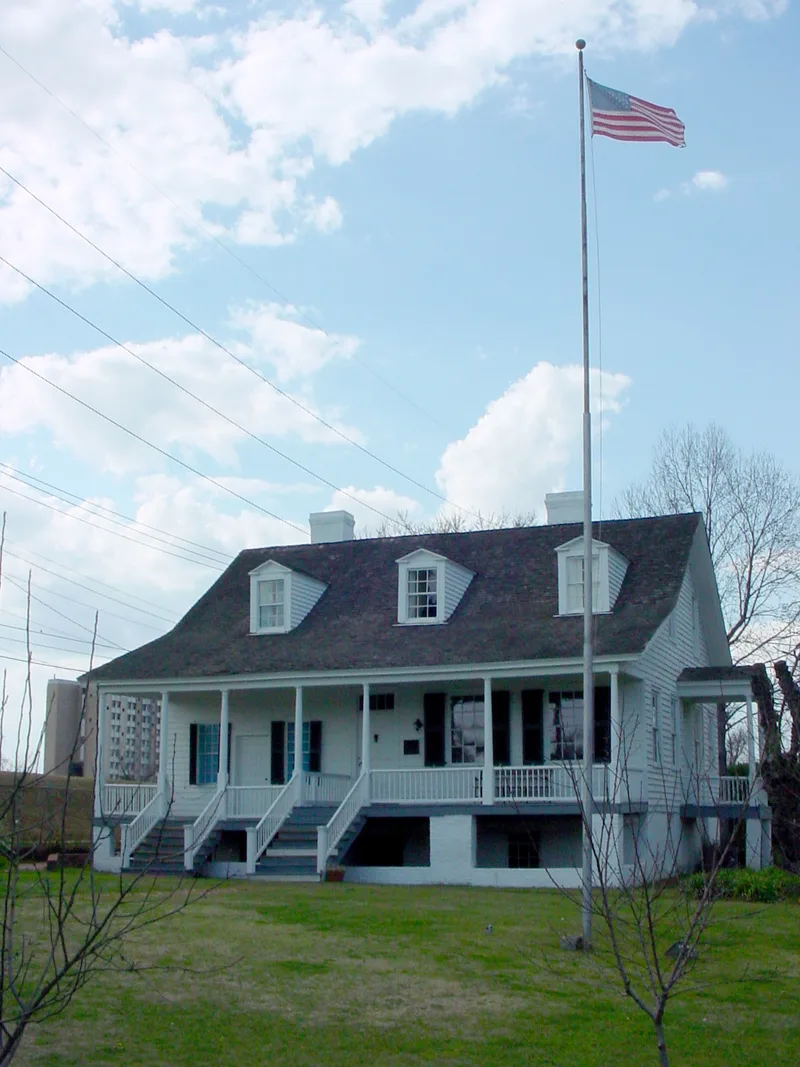
Meadow Garden is a raised frame cottage on Nelson Street in Augusta, built in the Sand Hills Cottage style that developed in the city's Summerville area. It actually joins two houses: a circa 1791 section on the south, which was the home of George Walton, and an early 19th century dwelling added on the north. Walton was born in Virginia in 1749 and became one of Georgia's three signers of the Declaration of Independence. He also served as governor, chief justice of the Georgia Supreme Court and U.S. Senator, and died at Meadow Garden in 1804. The property later passed to the Nelson family, and in 1901 the Daughters of the American Revolution bought it for $2,000, raised through ten-cent contributions from members. Their campaign to save the house began in 1897 and is described as one of the nation's earliest preservation efforts. The house now operates as a museum on about two-fifths of an acre beside the Augusta Canal and Enterprise Mill.
Significance in brief: The form argues the house is a good example of the Sand Hills Cottage, a style native to the Augusta area. It is also significant as the home of George Walton, a Georgia signer of the Declaration of Independence, who was also governor, chief justice and U.S. Senator. The form also notes that the campaign to save the house, begun in 1897, was among the nation's earliest preservation efforts.
Machine-generated summary. This summary was generated by a language model from the official nomination document and has not been reviewed line by line by an editor. It may contain errors. Check the source document before relying on any detail. Source: nomination document (PDF) · National Archives catalog entry. NRHP reference 76000646, listed July 19, 1976. Summary generated October 2026 (model claude-sonnet-5-5, prompt v1.0-2026-10-29, confidence high).
Key facts
| Address | 1230 Nelson St., Augusta |
|---|---|
| County | Richmond County |
| Listed | July 19, 1976 |
| Reference number | 76000646 |
| Resource type | Building |
| Period of significance | Circa 1791 |
| Architect / builder | Unknown |
| Architectural style | Sand Hills Cottage |
| Areas of significance | Politics/Government |
| Level of significance | National |
| National Historic Landmark | Yes, designated December 21, 1981 |
| Status (as stated in the nomination) | Open to the public as a house museum, owned by the Georgia Society, Daughters of the American Revolution, and undergoing refurbishing with period items being acquired. |
| Acreage | 0.4 |
| Coordinates | 33.47383, -81.97985 (NPS GIS) |
What listing means for this property
National Register listing is honorary: it recognises significance and does not restrict what a private owner may do without federal money or permits. It unlocks the 20% federal rehabilitation tax credit for income-producing buildings, state credits in many states, and Section 106 review when federal agencies are involved. See what listing means in practice.
General information, not legal or tax advice. Rules change; confirm with your State Historic Preservation Office or a qualified adviser.
Sources and further reading
- National Park Service, National Register of Historic Places database (snapshot May 2026), reference 76000646.
- Nomination form (PDF, National Archives) — catalog entry
- Wikipedia article (used for cross-checking only; text not reproduced here)
- Wikidata Q6803236
- This listing as JSON
Last updated October 2026. Found an error? See the editorial policy for how to report it.