St. Thomas African Methodist Episcopal Church

Why it's listed
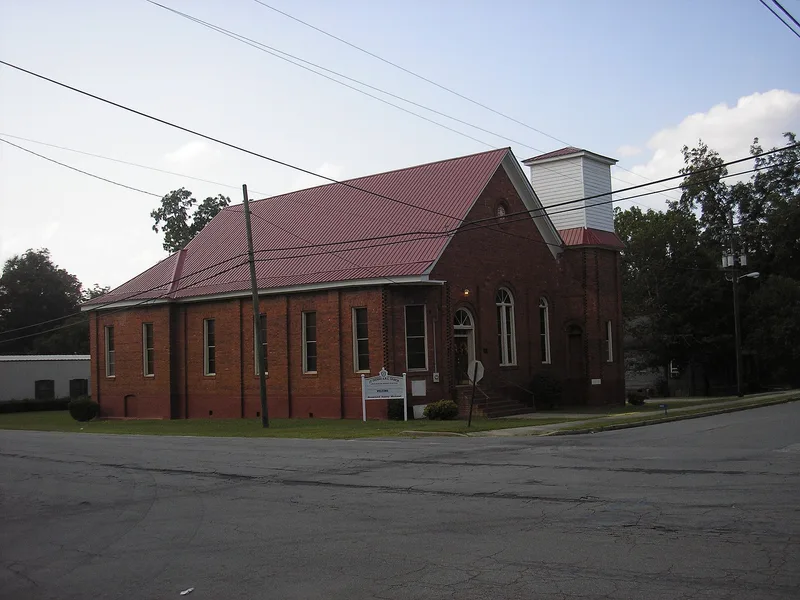
St. Thomas African Methodist Episcopal Church is a large brick, gable-front church at the corner of North Dooly and Second streets in Hawkinsville, Georgia. Built between 1908 and 1912, it has a tall side steeple, brick buttresses, round arches over windows and doors, and decorative brickwork, all features of the Folk Victorian style. The congregation was organized in 1866 under Reverend Henry McNeil Turner, and earlier church buildings stood on the site, including a wood-framed one from 1877. The nomination describes the church as historically the largest and only brick building in its African-American neighborhood and as a key community landmark. It notes that the church hosted civil rights groups such as the NAACP in the 1960s. The builders are not known, though local African-American craftsmen are thought likely. Inside, the plaster walls, wainscoting, altar railing and choir loft ironwork survive. The church remains in use as a house of worship and meeting place.
Significance in brief: The nomination argues that the church is an important community landmark in a historically African-American neighborhood and was historically the largest and only brick building there. It is also presented as an excellent example of a side-steeple church in the Folk Victorian style. The congregation dates to 1866 and later hosted civil rights groups such as the NAACP.
Machine-generated summary. This summary was generated by a language model from the official nomination document and has not been reviewed line by line by an editor. It may contain errors. Check the source document before relying on any detail. Source: nomination document (PDF) · National Archives catalog entry. NRHP reference 00001477, listed December 7, 2000. Summary generated October 2026 (model claude-sonnet-5-5, prompt v1.0-2026-10-29, confidence high).
Key facts
| Address | 401 N. Dooly St., Hawkinsville |
|---|---|
| County | Pulaski County |
| Listed | December 7, 2000 |
| Reference number | 00001477 |
| Resource type | Building |
| Period of significance | 1908-1950 |
| Architect / builder | Unknown |
| Architectural style | Folk Victorian |
| Criteria |
|
| Areas of significance | Black, Architecture |
| Level of significance | Local |
| Status (as stated in the nomination) | Still used as a church; the congregation numbers about 50 and the building hosts community meetings and choir rehearsals. |
| Acreage | 0.4 |
| Coordinates | 32.28907, -83.47297 (NPS GIS) |
What listing means for this property
Religious properties are listed for their architectural or historical significance, not their religious use. Listing is honorary and does not restrict the congregation's use of the building. The federal rehabilitation credit is generally unavailable unless part of the building is income-producing; some state programmes and preservation grants do cover religious buildings. Federal funding or permits trigger Section 106 review.
General information, not legal or tax advice. Rules change; confirm with your State Historic Preservation Office or a qualified adviser.
Sources and further reading
- National Park Service, National Register of Historic Places database (snapshot May 2026), reference 00001477.
- Nomination form (PDF, National Archives) — catalog entry
- Wikipedia article (used for cross-checking only; text not reproduced here)
- Wikidata Q16900614
- This listing as JSON
Last updated October 2026. Found an error? See the editorial policy for how to report it.