South Candler Street-Agnes Scott College Historic District
Also known as: Decatur Female Seminary (1889); Agnes Scott Institute (1890-1

Why it's listed
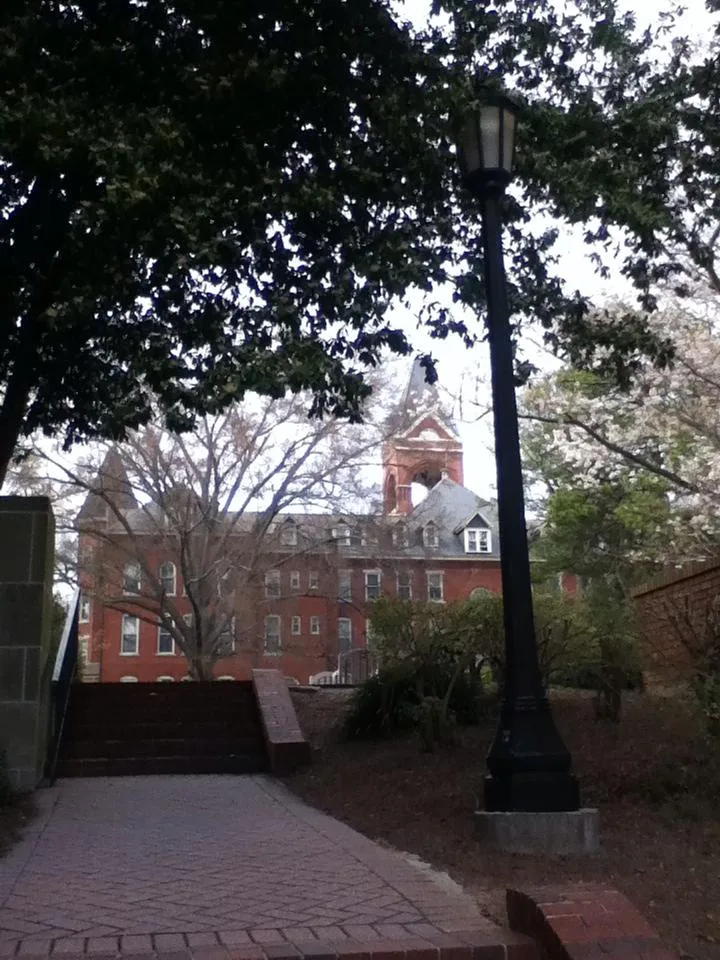
This Decatur, Georgia district pairs one of the city's oldest and most intact residential neighborhoods with the historic campus of Agnes Scott College. South Candler Street began developing in the 1880s as large homes on large lots, and its houses range from Italianate and Queen Anne examples to Folk Victorian cottages, Colonial Revival residences, Craftsman bungalows, and a few Tudor Revival and Minimal Traditional homes of the early 1940s. The college began in 1889 as the Decatur Female Seminary, founded by Presbyterian minister Frank H. Gaines, and became a main catalyst for the neighborhood's growth. Many early residents were its trustees, supporters, and faculty. Its campus is dominated by Academic Gothic Revival buildings, beginning with Agnes Scott Hall of 1891, designed by Bruce and Morgan. The district was listed for its architecture and its role in education, with a period of significance running from about 1880 to 1943. It includes 91 contributing and 21 noncontributing resources.
Significance in brief: The district is significant in architecture for its good examples of late 19th- and early 20th-century house styles and types, and for Academic Gothic Revival college buildings by locally prominent architects. It is also significant in education through the history of Agnes Scott College, which drove development of the neighborhood. South Candler Street holds the best collection of Late Victorian architecture in the Decatur area.
Machine-generated summary. This summary was generated by a language model from the official nomination document and has not been reviewed line by line by an editor. It may contain errors. Check the source document before relying on any detail. Source: nomination document (PDF) · National Archives catalog entry. NRHP reference 94000787, listed July 29, 1994. Summary generated October 2026 (model claude-sonnet-5-5, prompt v1.0-2026-10-29, confidence medium).
Key facts
| Address | Roughly bounded by E. College, S. McDonough, S. Candler, E. Hill and E. Davis Sts., Decatur |
|---|---|
| County | DeKalb County |
| Listed | July 29, 1994 |
| Reference number | 94000787 |
| Resource type | District |
| Period of significance | c.1880-1943 |
| Architect / builder | Bruce & Morgan; Morgan & Dillon; Edwards and Sayward; Logan & Williams; Robert & Company; Ivy and Crook; Edwards & Portman; William Sayward; Leila Ross Wilburn; Roy M. Abernathy; William Ansley; Guy Walter Rutland; E. E. Treadwell |
| Architectural style | Late Victorian (Queen Anne, Italianate), Late 19th and Early 20th Century Revivals (Classical, Colonial, Tudor, Late Gothic Revival), Bungalow/Craftsman, Folk Victorian, Minimal Traditional |
| Criteria |
|
| Areas of significance | Architecture, Education |
| Level of significance | State |
| Status (as stated in the nomination) | Historic functions of college and residential use continue today; most houses are in good condition with relatively few exterior alterations. |
| Acreage | 95 |
| Coordinates | 33.76464, -84.29357 (NPS GIS) |
What listing means for this property
This is a historic district. Buildings within its boundary are either contributing (they add to the district's significance) or non-contributing. Owners of contributing income-producing buildings can claim the 20% federal rehabilitation tax credit; homeowners should look at state credits. National Register districts impose no design review by themselves; a local historic district ordinance, if one exists, does (the difference explained).
General information, not legal or tax advice. Rules change; confirm with your State Historic Preservation Office or a qualified adviser.
Sources and further reading
- National Park Service, National Register of Historic Places database (snapshot May 2026), reference 94000787.
- Nomination form (PDF, National Archives) — catalog entry
- Wikipedia article (used for cross-checking only; text not reproduced here)
- Wikidata Q7566498
- This listing as JSON
Last updated October 2026. Found an error? See the editorial policy for how to report it.