Cuyler-Brownville Historic District
Also known as: Cuyler-Brownsville Historic District

Why it's listed
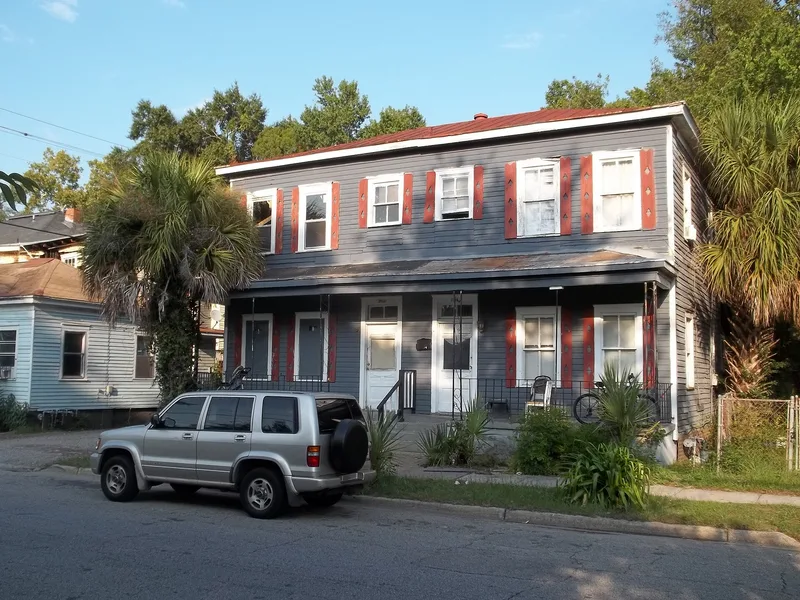
Cuyler-Brownville is a historically African-American neighborhood in southwest Savannah, laid out on a grid and built up between the late 1860s and the late 1930s. It grew from two post-Civil War communities, Dilliontown and Brownville, where former slaves settled. In the north, Peter Wiltberger Meldrim built the wood-framed Meldrim Row cottages in the 1880s to house African-American laborers, and later one- and two-story rowhouses followed. South of Kline Street, single houses in Colonial Revival, Craftsman, Neoclassical Revival and Folk Victorian styles reflect both working- and middle-class residents. The district also keeps corner stores, a 1937 gas station, churches, brick-paved streets, oak-lined blocks and Wells Park. Its community landmarks include the 1914 Cuyler Street School, the School of the Immaculate Heart of Mary, the Florance Street School and the 1931 Charity Hospital, which trained Black nurses and served Black patients. Together these buildings document African-American education, health care, commerce and neighborhood planning in Georgia.
Significance in brief: The district is argued to have statewide significance in African-American ethnic history, community planning, social history, architecture, health, education and commerce. It grew from the post-Civil War Dilliontown and Brownville settlements and from Peter Wiltberger Meldrim's Meldrim Row housing. It keeps a varied, intact set of homes and community institutions, including Charity Hospital and the Cuyler Street School.
Machine-generated summary. This summary was generated by a language model from the official nomination document and has not been reviewed line by line by an editor. It may contain errors. Check the source document before relying on any detail. Source: nomination document (PDF) · National Archives catalog entry. NRHP reference 98000028, listed February 13, 1998. Summary generated October 2026 (model claude-sonnet-5-5, prompt v1.0-2026-10-29, confidence medium).
Key facts
| Address | Roughly bounded by Anderson Ln., W. 31st St., Montgomery St., Victory Dr., Ogeechee Rd., and Hopkins St., Savannah |
|---|---|
| County | Chatham County |
| Listed | February 13, 1998 |
| Reference number | 98000028 |
| Resource type | District |
| Period of significance | 1867-1937 |
| Architect / builder | Cletus W. Bergen (Charity Hospital, 1931) |
| Architectural style | Late Victorian (Queen Anne, Italianate), Colonial Revival, Neo-Classical Revival, Bungalow/Craftsman, Folk Victorian |
| Criteria |
|
| Areas of significance | Black, Community Planning and Development, Social History, Architecture, Health/Medicine, Education, Commerce |
| Level of significance | State |
| Status (as stated in the nomination) | Largely intact historic neighborhood; Charity Hospital was damaged by fire and neglect and was being rehabilitated as a community center. Some schools now serve new community uses. |
| Acreage | 160 |
| Coordinates | 32.05977, -81.10724 (NPS GIS) |
What listing means for this property
This is a historic district. Buildings within its boundary are either contributing (they add to the district's significance) or non-contributing. Owners of contributing income-producing buildings can claim the 20% federal rehabilitation tax credit; homeowners should look at state credits. National Register districts impose no design review by themselves; a local historic district ordinance, if one exists, does (the difference explained).
General information, not legal or tax advice. Rules change; confirm with your State Historic Preservation Office or a qualified adviser.
Sources and further reading
- National Park Service, National Register of Historic Places database (snapshot May 2026), reference 98000028.
- Nomination form (PDF, National Archives) — catalog entry
- Wikipedia article (used for cross-checking only; text not reproduced here)
- Wikidata Q135712796
- This listing as JSON
Last updated October 2026. Found an error? See the editorial policy for how to report it.