St. John's Church Historic District
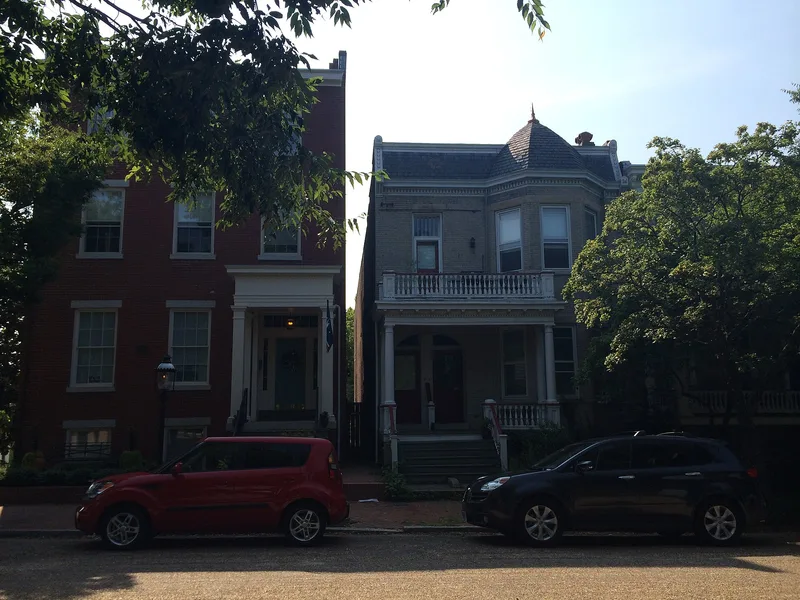

Why it's listed
Church Hill is a neighborhood of townhouses, a church and small parks on a hill east of downtown Richmond, Virginia. Its centerpiece is St. John's Church, whose transept was the first building on the hill and which hosted the 1775 Virginia Convention, where Patrick Henry delivered his "Liberty or Death" speech. The district takes in roughly 240 acres and includes the oldest frame structure and some of the oldest brick houses in the city. Most buildings are side-hall townhouses, ranging from Federal houses with Flemish bond brickwork to Carrington Row of 1818, Greek Revival homes of the 1840s and 1850s, and later houses with iron and wood porches. Settlement was slow because of steep slopes, and many residents moved west by the 1890s. The area declined for decades until Historic Richmond Foundation formed in 1956, and the city created a local historic district in 1957. Brick sidewalks, granite curbs, cobblestones and retaining walls add to the nineteenth-century character.
Machine-generated summary. This summary was generated by a language model from the official nomination document and has not been reviewed line by line by an editor. It may contain errors. Check the source document before relying on any detail. Source: nomination document (PDF) · catalog entry. Generated October 2026 (model claude-sonnet-5-5, prompt v1.0-2026-10-29).
| Styles | Mix of Federal, Neo-Classical, Greek Revival and Victorian styles, mostly side-hall townhouses |
|---|---|
| Areas of significance | Landscape Architecture, Conservation, Politics/Government, Architecture, Religion |
| Acreage | 100 |
| Boundary source | NPS cultural-resource GIS polygon |
| Full listing page | St. John's Church Historic District (property record) |
What listing means for this property
This is a historic district. Buildings within its boundary are either contributing (they add to the district's significance) or non-contributing. Owners of contributing income-producing buildings can claim the 20% federal rehabilitation tax credit; homeowners should look at state credits. National Register districts impose no design review by themselves; a local historic district ordinance, if one exists, does (the difference explained).
General information, not legal or tax advice. Rules change; confirm with your State Historic Preservation Office or a qualified adviser.