Franklin Historic District

Why it's listed
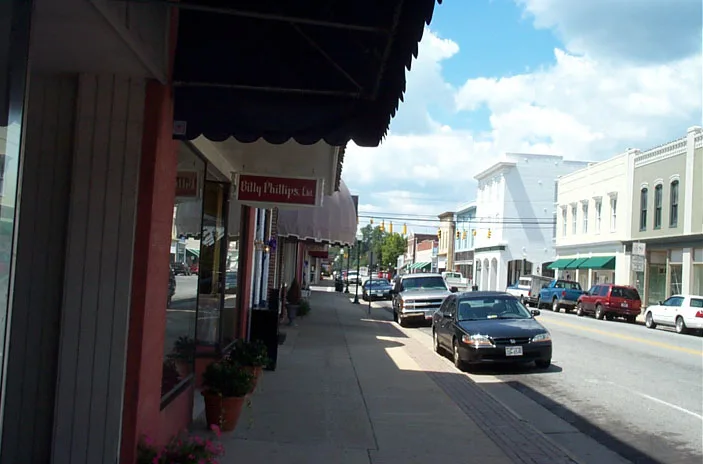
Franklin's historic district covers roughly 70 acres on the western bank of the Blackwater River in southeastern Virginia. It joins a downtown commercial core along Main Street and Second Avenue with a large residential neighborhood centered on High and Clay streets. The village began between 1835 and 1840 beside a railroad bridge and became a depot for regional farm products. After the Civil War, lumber and peanuts drove new growth. Most surviving buildings date from that late 19th-century revival. A fire in 1881 destroyed the original commercial center, and a town ordinance then required brick or stone construction, which explains the rows of Italianate and Colonial Revival brick storefronts. Houses range from vernacular frame dwellings to Queen Anne, Shingle, Bungalow and Foursquare examples, including The Elms. Railroad buildings and peanut warehouses stand near the south end of Main and Mechanic streets. Of 265 structures, 39 are noncontributing.
Machine-generated summary. This summary was generated by a language model from the official nomination document and has not been reviewed line by line by an editor. It may contain errors. Check the source document before relying on any detail. Source: nomination document (PDF) · catalog entry. Generated October 2026 (model claude-sonnet-5-5, prompt v1.0-2026-10-29).
| Period of significance | Mid-19th Century to Present |
|---|---|
| Styles | Victorian vernacular and Queen Anne residences; Italianate, Colonial Revival, Neo-Classical and Art Deco commercial buildings |
| Areas of significance | Commerce, Transportation, Architecture |
| Acreage | 70 |
| Boundary source | NPS cultural-resource GIS polygon |
| Full listing page | Franklin Historic District (property record) |
What listing means for this property
This is a historic district. Buildings within its boundary are either contributing (they add to the district's significance) or non-contributing. Owners of contributing income-producing buildings can claim the 20% federal rehabilitation tax credit; homeowners should look at state credits. National Register districts impose no design review by themselves; a local historic district ordinance, if one exists, does (the difference explained).
General information, not legal or tax advice. Rules change; confirm with your State Historic Preservation Office or a qualified adviser.