East Main Street Historic District

Why it's listed
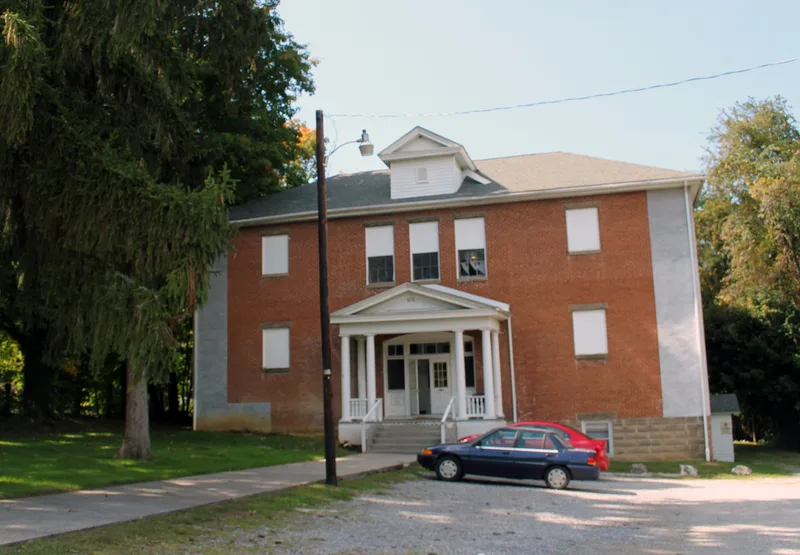
On a hill northeast of Christiansburg's original town, this twenty-acre neighborhood follows the old road to Salem along East Main and Park Streets. It holds mostly late nineteenth- and early twentieth-century houses in Queen Anne, Colonial Revival, Foursquare, Craftsman and bungalow styles, with a row of brick bungalows on Pepper Street. Two early log houses, a Gothic Revival Episcopal church, the former high school and an elementary school add variety. The oldest building is the Barnett-Montague House, a log and frame dwelling later owned by Rice D. Montague, who gave land for the railroad station. Test excavations in its yard found a deep midden of early to mid-nineteenth-century ceramics and other artifacts. After the Lee Highway bypassed the road in the early twentieth century, the area became a quiet residential backwater. Stone and concrete retaining walls along East Main Street tie the streetscape together. The district was listed for its architecture and archaeological potential.
Machine-generated summary. This summary was generated by a language model from the official nomination document and has not been reviewed line by line by an editor. It may contain errors. Check the source document before relying on any detail. Source: nomination document (PDF) · catalog entry. Generated October 2026 (model claude-sonnet-5-5, prompt v1.0-2026-10-29).
| Period of significance | c. 1800-1930s |
|---|---|
| Styles | Late Victorian: Queen Anne; Late 19th and 20th century revivals: Colonial Revival; Other: center-passage plan |
| Areas of significance | Historic - Non-Aboriginal, Architecture |
| Acreage | 20 |
| Boundary source | NPS cultural-resource GIS polygon |
| Full listing page | East Main Street Historic District (property record) |
What listing means for this property
This is a historic district. Buildings within its boundary are either contributing (they add to the district's significance) or non-contributing. Owners of contributing income-producing buildings can claim the 20% federal rehabilitation tax credit; homeowners should look at state credits. National Register districts impose no design review by themselves; a local historic district ordinance, if one exists, does (the difference explained).
General information, not legal or tax advice. Rules change; confirm with your State Historic Preservation Office or a qualified adviser.