Danville Historic District (Additional Documentation)

Why it's listed
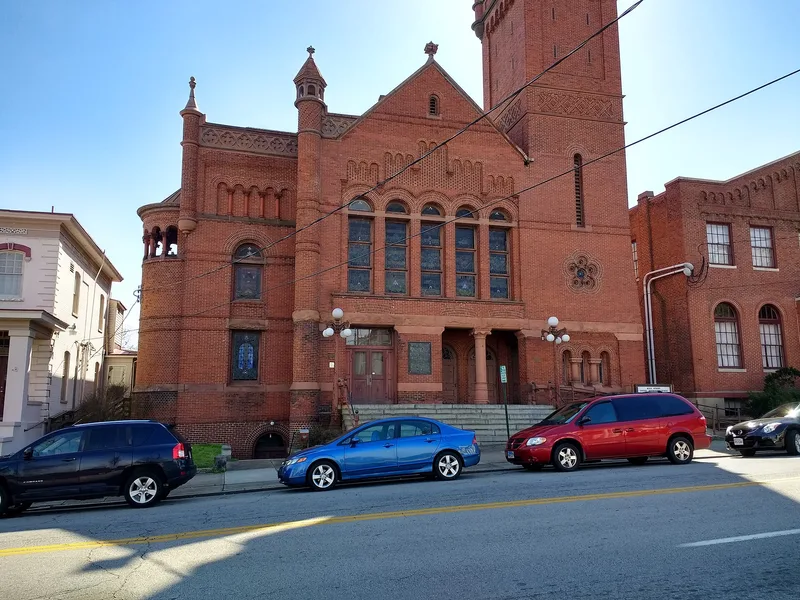
Danville's historic district covers about 110 acres along Main and West Main Streets and the quieter residential blocks to the east. Its buildings span the full range of styles used in the city, from two early nineteenth-century houses to Greek Revival, Gothic Revival, Italianate, Romanesque, Eastlake, Queen Anne and Beaux Arts examples of the early twentieth century. The nomination calls it perhaps the finest concentration of Victorian and Edwardian houses in Virginia. Much of this building followed the post-Civil War tobacco trade, including the auction warehouse method begun by Thomas Neal in the 1850s, and the textile mills founded in 1882 by the Schoolfield brothers and Thomas Fitzgerald. Notable houses include the Penn-Wyatt house of 1876 at 862 Main Street and the Schoolfield-Compson House at 844 Main Street. The Sutherlin Mansion served as Jefferson Davis's last official residence in 1865. Churches, a hospital, a college and offices mix with homes, and many houses remain in use as residences. Historic district zoning protects the area.
Machine-generated summary. This summary was generated by a language model from the official nomination document and has not been reviewed line by line by an editor. It may contain errors. Check the source document before relying on any detail. Source: nomination document (PDF). Generated October 2026 (model claude-sonnet-5-5, prompt v1.0-2026-10-29).
| Styles | Greek Revival, Gothic Revival, Italianate, Romanesque, Eastlake, Queen Anne, French Renaissance Revival and Beaux Arts |
|---|---|
| Areas of significance | Industry, Commerce, Politics/Government, Architecture |
| Acreage | 110 |
| Boundary source | NPS cultural-resource GIS polygon |
| Full listing page | Danville Historic District (Additional Documentation) (property record) |
What listing means for this property
This is a historic district. Buildings within its boundary are either contributing (they add to the district's significance) or non-contributing. Owners of contributing income-producing buildings can claim the 20% federal rehabilitation tax credit; homeowners should look at state credits. National Register districts impose no design review by themselves; a local historic district ordinance, if one exists, does (the difference explained).
General information, not legal or tax advice. Rules change; confirm with your State Historic Preservation Office or a qualified adviser.