Buchanan Historic District

Why it's listed
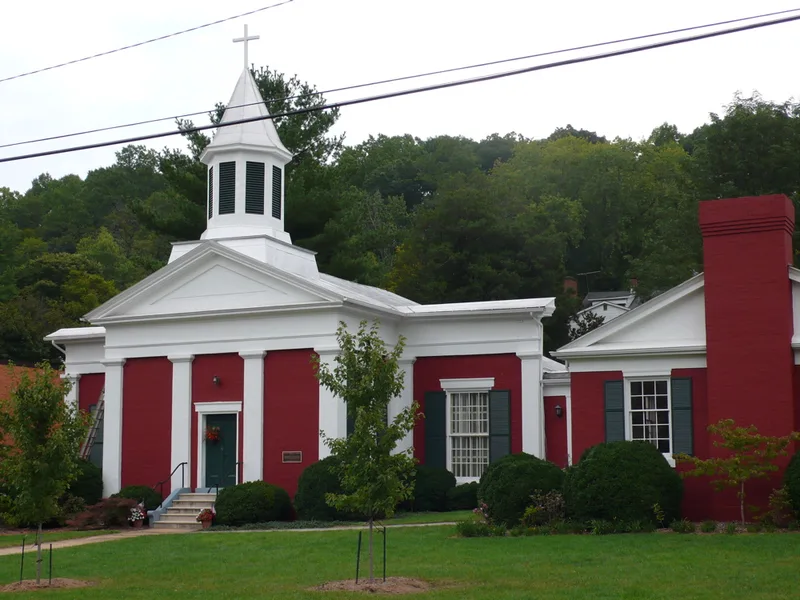
Buchanan Historic District occupies both banks of the James River at the foot of Purgatory and Cove mountains in Botetourt County. It combines two earlier villages, Pattonsburg, established in 1788 on the north bank, and Buchanan, established in 1811 on the south, which merged into one incorporated town in 1882. The district includes the Pattonsburg street grid shown on an 1818 map. Ferries and later covered bridges crossed the river here, and the James River & Kanawha Canal reached the town in 1851. Railroads followed in the 1870s and 1880s, bringing industry such as the 1903 Virginia Can Company. Surviving buildings include Flemish bond brick churches, hotels and houses from the antebellum period, Italianate commercial blocks, Queen Anne and Colonial Revival homes, and an Art Deco theatre. Three African American neighborhoods and several cemeteries are also part of the district. Its period of significance runs from 1818 to 1948, and later buildings are mostly counted as noncontributing.
Machine-generated summary. This summary was generated by a language model from the official nomination document and has not been reviewed line by line by an editor. It may contain errors. Check the source document before relying on any detail. Source: nomination document (PDF) · catalog entry. Generated October 2026 (model claude-sonnet-5-5, prompt v1.0-2026-10-29).
| Period of significance | 1818-1948 |
|---|---|
| Styles | Greek Revival, Gothic Revival, Italianate, Classical Revival, Tudor Revival, Colonial Revival, Dutch Colonial Revival, Art Deco |
| Areas of significance | Transportation, Architecture, Commerce, Industry |
| Acreage | 370 |
| Boundary source | NPS cultural-resource GIS polygon |
| Full listing page | Buchanan Historic District (property record) |
What listing means for this property
This is a historic district. Buildings within its boundary are either contributing (they add to the district's significance) or non-contributing. Owners of contributing income-producing buildings can claim the 20% federal rehabilitation tax credit; homeowners should look at state credits. National Register districts impose no design review by themselves; a local historic district ordinance, if one exists, does (the difference explained).
General information, not legal or tax advice. Rules change; confirm with your State Historic Preservation Office or a qualified adviser.