Brentsville Historic District

Why it's listed
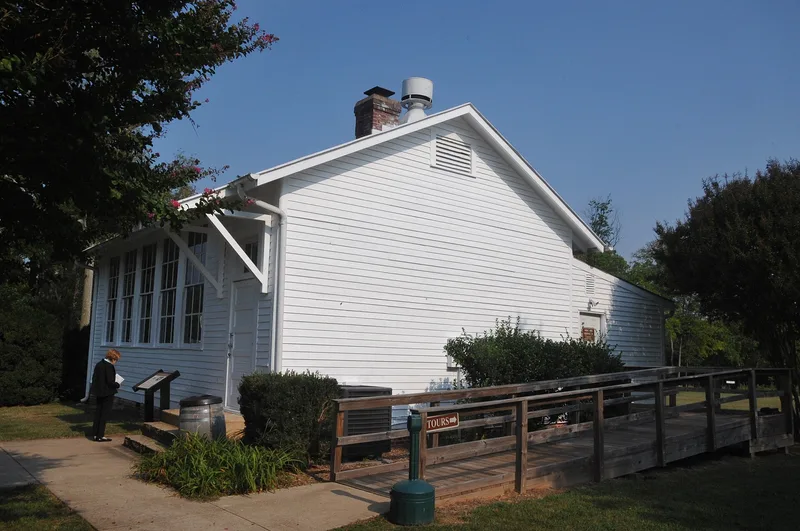
Brentsville is a small village in central Prince William County, Virginia, laid out in 1822 around the county's fourth courthouse. The nominated district covers about 27 acres on both sides of Bristow Road and holds 25 contributing and 5 noncontributing resources. The core is a public square with the Federal-style brick courthouse, designed by William Claytor of Orange County, and the brick jail built by James Drisco Masson. A circa 1910 one-room schoolhouse stands nearby. Three churches include the 1847 Greek Revival sandstone St. James Episcopal Church, now a Baptist church, and the circa 1875 Union Church. Houses range from the stuccoed Federal-style White House of 1822 to vernacular I-houses and a 1940s bungalow, many with farm outbuildings. The district was listed because it records Brentsville's life as a county seat and shows a varied set of public, religious and domestic buildings. The form warns that road widening, development and neglect threaten its integrity.
Machine-generated summary. This summary was generated by a language model from the official nomination document and has not been reviewed line by line by an editor. It may contain errors. Check the source document before relying on any detail. Source: nomination document (PDF) · catalog entry. Generated October 2026 (model claude-sonnet-5-5, prompt v1.0-2026-10-29).
| Period of significance | 1822-1940 |
|---|---|
| Styles | Early Classical Revival, Federal, Greek Revival, Frame I House |
| Areas of significance | Architecture, Politics/Government |
| Acreage | 27 |
| Boundary source | NPS cultural-resource GIS polygon |
| Full listing page | Brentsville Historic District (property record) |
What listing means for this property
This is a historic district. Buildings within its boundary are either contributing (they add to the district's significance) or non-contributing. Owners of contributing income-producing buildings can claim the 20% federal rehabilitation tax credit; homeowners should look at state credits. National Register districts impose no design review by themselves; a local historic district ordinance, if one exists, does (the difference explained).
General information, not legal or tax advice. Rules change; confirm with your State Historic Preservation Office or a qualified adviser.