Boulevard Historic District

Why it's listed
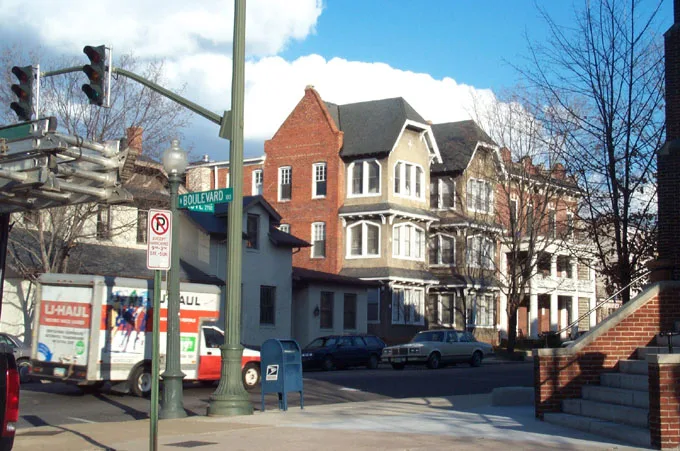
Boulevard Historic District is a tree-lined, thirteen-block corridor in Richmond, Virginia, running along North and South Boulevard on either side of Main Street. Laid out as Clover Street and renamed Boulevard by 1890, it served as a direct route from the Main Street trolley line to Reservoir Park, now Byrd Park. It stayed a minor road until the turn of the century, when nearby land was subdivided for speculative housing. Most building took place between 1910 and 1935, producing town houses, apartment buildings and churches in Colonial Revival, Spanish Eclectic and Tudor Revival styles. Three large public buildings stand on the former grounds of a Confederate veterans' home: Battle Abbey, the Virginia Museum of Fine Arts and the United Daughters of the Confederacy headquarters. Tuscan Villas, built in 1928-29, is a major Mediterranean-influenced apartment complex. The district has 145 contributing buildings and only five noncontributing ones, and it keeps a cohesive appearance, with street trees, lamps and a grassy median.
Machine-generated summary. This summary was generated by a language model from the official nomination document and has not been reviewed line by line by an editor. It may contain errors. Check the source document before relying on any detail. Source: nomination document (PDF) · catalog entry. Generated October 2026 (model claude-sonnet-5-5, prompt v1.0-2026-10-29).
| Styles | Colonial Revival, Spanish Eclectic, Tudor Revival, Neo-classical, Classical Revival, Gothic Revival |
|---|---|
| Areas of significance | Community Planning and Development, Military, Architecture |
| Acreage | 61 |
| Boundary source | NPS cultural-resource GIS polygon |
| Full listing page | Boulevard Historic District (property record) |
What listing means for this property
This is a historic district. Buildings within its boundary are either contributing (they add to the district's significance) or non-contributing. Owners of contributing income-producing buildings can claim the 20% federal rehabilitation tax credit; homeowners should look at state credits. National Register districts impose no design review by themselves; a local historic district ordinance, if one exists, does (the difference explained).
General information, not legal or tax advice. Rules change; confirm with your State Historic Preservation Office or a qualified adviser.