Beverley Historic District

Why it's listed
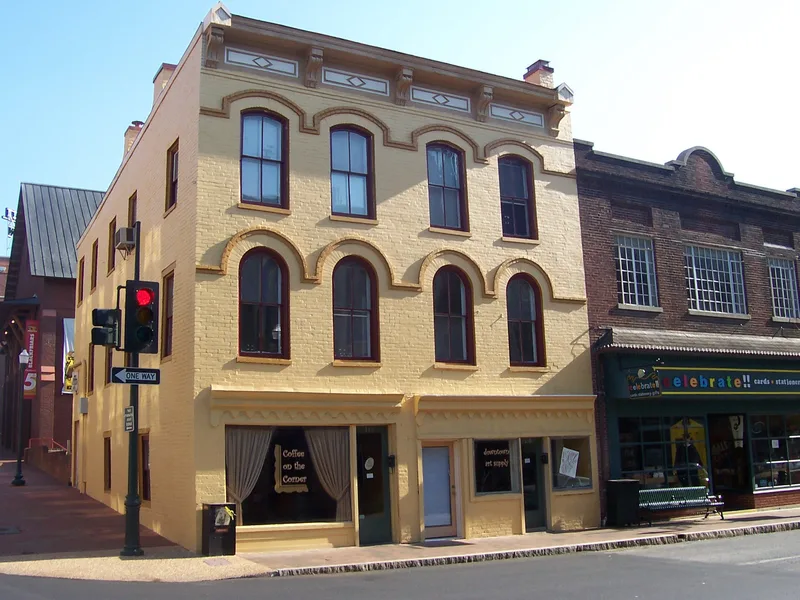
Downtown Staunton's Beverley Historic District covers about 30 acres and eleven square blocks, with roughly 150 buildings. Beverley Street, the city's Main Street, runs east-west through the middle, and the streets still follow the grid laid out in the 1740s by William Beverley and surveyor Thomas Lewis. Little remains of the 18th-century frontier village. The commercial core is instead a well-preserved group of 19th-century buildings, mostly dating from after the Civil War. Brick Italianate buildings of two to four stories give the area its cohesion, while stone, terra cotta and Romanesque, Queen Anne and Neo-Classical designs add variety. Heavy cornices, decorated lintels and stained glass survive, especially on upper floors. An unusual number of the buildings were professionally designed, many by local architect T. J. Collins, who worked in Staunton from 1891 to 1912. Landmarks include the old YMCA, the Masonic Temple, the courthouse and National Valley Bank. The hilly setting gives the downtown a varied skyline.
Machine-generated summary. This summary was generated by a language model from the official nomination document and has not been reviewed line by line by an editor. It may contain errors. Check the source document before relying on any detail. Source: nomination document (PDF) · catalog entry. Generated October 2026 (model claude-sonnet-5-5, prompt v1.0-2026-10-29).
| Styles | Predominantly Italianate commercial, with Victorian-era revivals, Romanesque Revival, Beaux Arts and Neo-Classical Revival |
|---|---|
| Areas of significance | Commerce, Exploration/Settlement, Politics/Government, Architecture, Agriculture |
| Acreage | 30 |
| Boundary source | NPS cultural-resource GIS polygon |
| Full listing page | Beverley Historic District (property record) |
What listing means for this property
This is a historic district. Buildings within its boundary are either contributing (they add to the district's significance) or non-contributing. Owners of contributing income-producing buildings can claim the 20% federal rehabilitation tax credit; homeowners should look at state credits. National Register districts impose no design review by themselves; a local historic district ordinance, if one exists, does (the difference explained).
General information, not legal or tax advice. Rules change; confirm with your State Historic Preservation Office or a qualified adviser.