Smithville Residential Historic District

Why it's listed
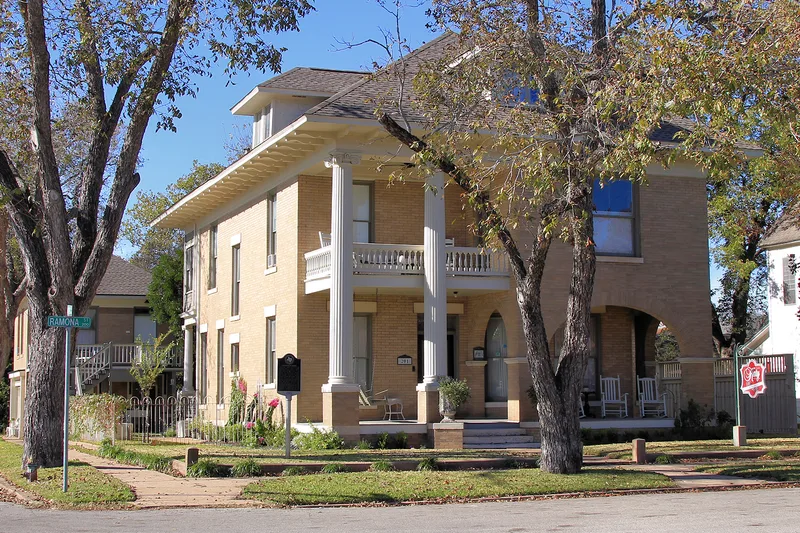
Smithville's residential district covers about 50 blocks around the town's commercial center on the high south bank of the Colorado River in Bastrop County, Texas. It holds 192 contributing and 173 noncontributing resources, mostly single-family houses built between 1887 and 1945. Pyramidal-roof houses are the most common type, alongside double-pen, center-passage, L-plan, T-plan, bungalow, Four-square, Queen Anne, Classical Revival, and Tudor Revival homes. Notable examples include the 1899 Burleson House, the 1905 Jones House, and the 1915 Chapman-Trousdale House. Four churches, a 1937 limestone post office with a 1939 New Deal mural, a 1908 brick school, and a former Civilian Conservation Corps-era fire station add institutional variety. Mature pecan, live oak, and hackberry trees shade streets laid out in a regular grid. Because the town sits on a spur off the main highway, much of its historic fabric has survived. The district was listed for its association with the broad patterns of local history.
Machine-generated summary. This summary was generated by a language model from the official nomination document and has not been reviewed line by line by an editor. It may contain errors. Check the source document before relying on any detail. Source: nomination document (PDF) · catalog entry. Generated October 2026 (model claude-sonnet-5-5, prompt v1.0-2026-10-29).
| Period of significance | ca. 1887 to 1945 |
|---|---|
| Styles | Vernacular pyramid roof; Bungalow/Craftsman; Late Victorian: Queen Anne |
| Areas of significance | Architecture, Community Planning and Development |
| Acreage | 150 |
| Boundary source | NPS cultural-resource GIS polygon |
| Full listing page | Smithville Residential Historic District (property record) |
What listing means for this property
This is a historic district. Buildings within its boundary are either contributing (they add to the district's significance) or non-contributing. Owners of contributing income-producing buildings can claim the 20% federal rehabilitation tax credit; homeowners should look at state credits. National Register districts impose no design review by themselves; a local historic district ordinance, if one exists, does (the difference explained).
General information, not legal or tax advice. Rules change; confirm with your State Historic Preservation Office or a qualified adviser.