Seward Plantation

The National Park Service has not published a boundary polygon for this district; the map shows the listed properties inside it and the district's reference point.
Why it's listed
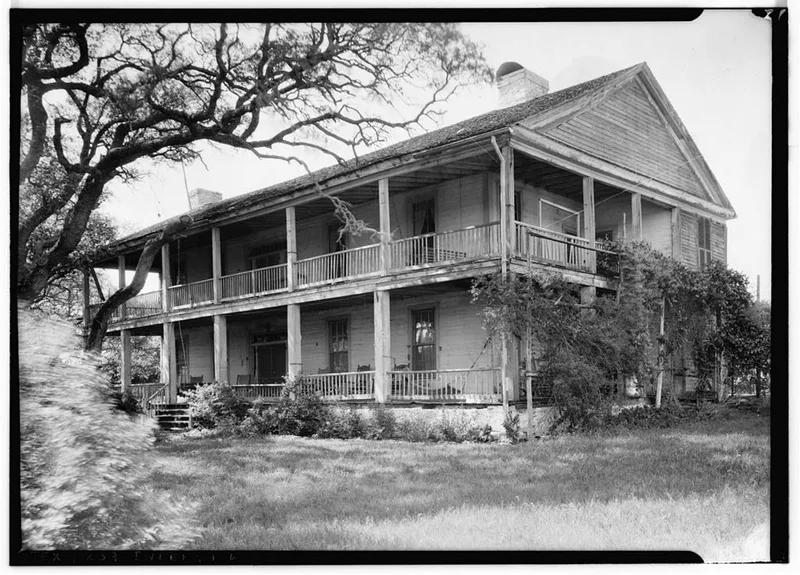
Seward Plantation is a 60-acre farmstead east of Independence in Washington County, Texas, laid out around 1855 by John H. Seward. Its centerpiece is a vernacular Greek Revival house of native red cedar on a shale foundation, with a double gallery across the south front. Family tradition says the house began as one story and was rolled about three-quarters of a mile to its present site before 1860, where a second story and rear additions followed. Around it stand a stone smokehouse, a log duplex that served as slave quarters, a frame cabin and blacksmith shed, barns, and the swale of the old La Bahía Road, which once passed within 50 yards of the porch until the 1950s. The property has stayed with the Seward family and remains largely intact. It is listed as a district because it preserves the buildings, landscape and agricultural history of an antebellum Texas plantation, from cotton growing to later hay and cattle.
Machine-generated summary. This summary was generated by a language model from the official nomination document and has not been reviewed line by line by an editor. It may contain errors. Check the source document before relying on any detail. Source: nomination document (PDF) · catalog entry. Generated October 2026 (model claude-sonnet-5-5, prompt v1.0-2026-10-29).
| Styles | Mid-19th Century: Greek Revival |
|---|---|
| Areas of significance | Architecture, Agriculture, Historic - Non-Aboriginal |
| Acreage | 60 |
| Boundary source | not published |
| Full listing page | Seward Plantation (property record) |
What listing means for this property
This is a historic district. Buildings within its boundary are either contributing (they add to the district's significance) or non-contributing. Owners of contributing income-producing buildings can claim the 20% federal rehabilitation tax credit; homeowners should look at state credits. National Register districts impose no design review by themselves; a local historic district ordinance, if one exists, does (the difference explained).
General information, not legal or tax advice. Rules change; confirm with your State Historic Preservation Office or a qualified adviser.