Dealey Plaza Historic District

Why it's listed
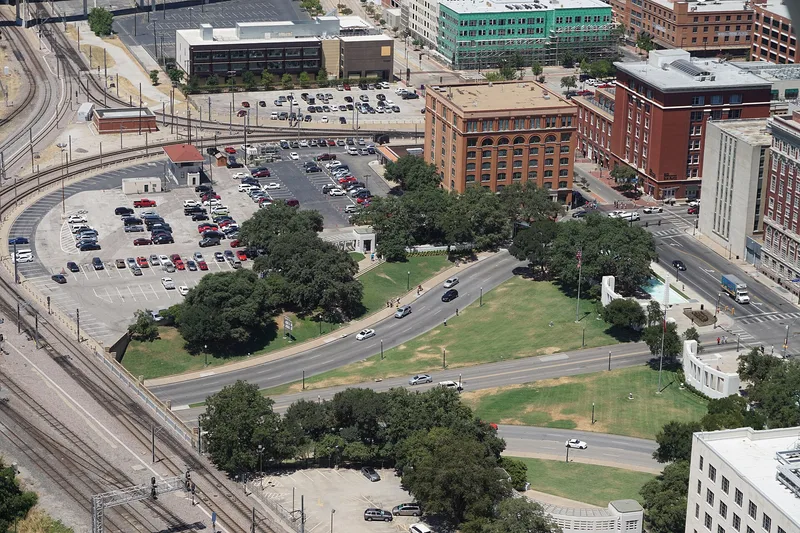
Dealey Plaza is a landscaped park of about three acres at the western edge of downtown Dallas, created between 1934 and 1940 from part of John Neely Bryan's original land grant. City engineers designed it as a gateway where Elm, Main and Commerce streets converge at the Triple Underpass beneath railroad tracks. Its concrete reflecting pools, colonnades, pergolas and planters follow a simplified Art Deco style, and it was named for civic leader George Bannerman Dealey. The district also takes in nearby buildings, including former warehouses influenced by Chicago commercial architecture, and part of the adjacent railyards. It was listed because President John F. Kennedy was shot on Elm Street here on November 22, 1963, and because the scene keeps a high degree of its 1963 appearance. The street alignments, underpass and original park features survive, though signs, lamp posts and markers have changed. Features added since 1963 are treated as noncontributing.
Machine-generated summary. This summary was generated by a language model from the official nomination document and has not been reviewed line by line by an editor. It may contain errors. Check the source document before relying on any detail. Source: nomination document (PDF) · catalog entry. Generated October 2026 (model claude-sonnet-5-5, prompt v1.0-2026-10-29).
| Styles | Chicago, Classical Revival, Romanesque, International; Plaza features in late simplified Art Deco |
|---|---|
| Areas of significance | Politics/Government, Architecture, Landscape Architecture |
| Acreage | 15 |
| Boundary source | NPS cultural-resource GIS polygon |
| Full listing page | Dealey Plaza Historic District (property record) |
What listing means for this property
This is a historic district. Buildings within its boundary are either contributing (they add to the district's significance) or non-contributing. Owners of contributing income-producing buildings can claim the 20% federal rehabilitation tax credit; homeowners should look at state credits. National Register districts impose no design review by themselves; a local historic district ordinance, if one exists, does (the difference explained).
General information, not legal or tax advice. Rules change; confirm with your State Historic Preservation Office or a qualified adviser.