Dallas Downtown Historic District (Boundary Increase)

Why it's listed
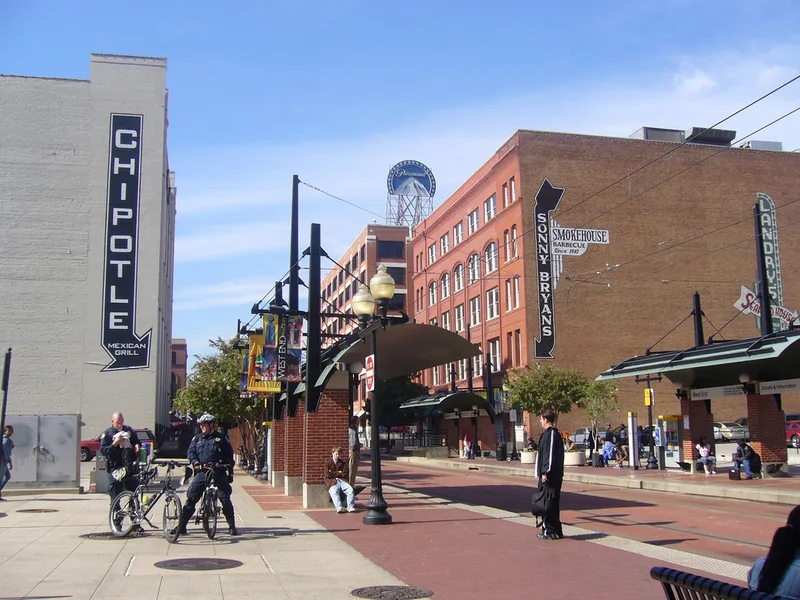
This boundary increase adds a section of south-east downtown Dallas to an existing historic district. The area, bounded roughly by Jackson, Harwood, Canton and South Ervay Streets, began as a residential neighborhood in the 1880s and was later reshaped by the growth of downtown into a commercial and industrial zone. Its 22 contributing resources, built between 1911 and 1958, include modest one- and two-story commercial buildings, film distribution offices, printing and utility facilities, and prominent church and fraternal buildings such as the Scottish Rite Cathedral and the Masonic Temple. Styles range from Neoclassical and Venetian Gothic to Zigzag Moderne, Art Moderne and mid-century Modern. The Warner Brothers film exchange of 1929 is noted as a leading Zigzag Moderne example and for Robert Johnson's 1937 recording sessions. The area was listed for its local significance in commerce and architecture. Twelve buildings are noncontributing because of age or alteration.
Machine-generated summary. This summary was generated by a language model from the official nomination document and has not been reviewed line by line by an editor. It may contain errors. Check the source document before relying on any detail. Source: nomination document (PDF) · catalog entry. Generated October 2026 (model claude-sonnet-5-5, prompt v1.0-2026-10-29).
| Period of significance | 1911-1958 |
|---|---|
| Styles | Late 19th and 20th Century Revivals (Neoclassical, Beaux Arts, Venetian Gothic, Romanesque Revival); Commercial Style; Modern Movement (Art Deco, Modern); 1-part and 2-part commercial blocks |
| Areas of significance | Commerce, Architecture |
| Acreage | 35.3 |
| Boundary source | NPS cultural-resource GIS polygon |
| Full listing page | Dallas Downtown Historic District (Boundary Increase) (property record) |
What listing means for this property
This is a historic district. Buildings within its boundary are either contributing (they add to the district's significance) or non-contributing. Owners of contributing income-producing buildings can claim the 20% federal rehabilitation tax credit; homeowners should look at state credits. National Register districts impose no design review by themselves; a local historic district ordinance, if one exists, does (the difference explained).
General information, not legal or tax advice. Rules change; confirm with your State Historic Preservation Office or a qualified adviser.