Charnwood Residential Historic District

Why it's listed
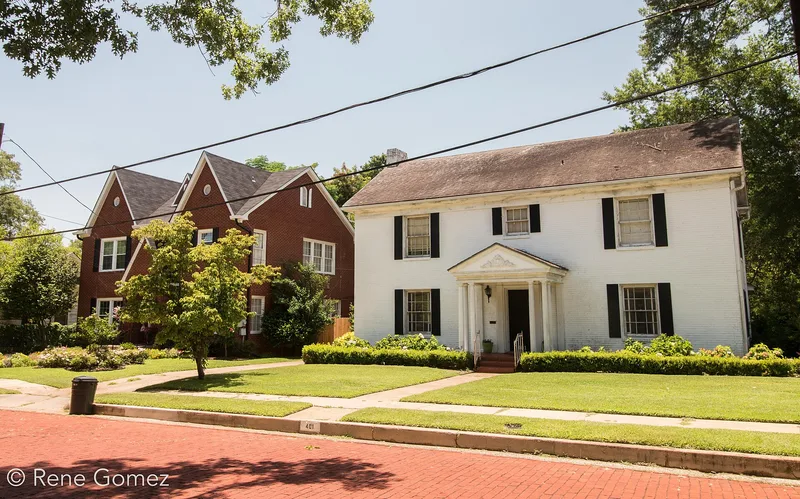
Charnwood Residential Historic District occupies a gently sloping rise about half a mile south of Tyler's original town square in East Texas. Its 12 blocks, covering roughly 59.5 acres, grew from scattered 1860s homesteads and a private school into a varied neighborhood of 331 resources, built mostly between about 1870 and 1950. A few large, architect-designed homes for the city's elite cluster along Charnwood Avenue, while most houses are modest Tudor Revival, Colonial Revival, bungalow and Minimal Traditional dwellings built by local craftsmen for middle and working class families. Eight platted subdivisions, dating from 1888 to 1948, shaped the street grid. Brick-paved streets, low stone and brick walls, and a stone-lined flood control channel built with Depression-era federal programs add to the character. Alterations have mostly been modest, and 208 of the resources contribute to the district's historic character. The mix of ages and styles distinguishes it from the more uniform neighborhoods around it.
Machine-generated summary. This summary was generated by a language model from the official nomination document and has not been reviewed line by line by an editor. It may contain errors. Check the source document before relying on any detail. Source: nomination document (PDF) · catalog entry. Generated October 2026 (model claude-sonnet-5-5, prompt v1.0-2026-10-29).
| Styles | Tudor Revival; Colonial Revival; Bungalow/Craftsman; Classical Revival |
|---|---|
| Areas of significance | Community Planning and Development, Architecture |
| Acreage | 59.5 |
| Boundary source | NPS cultural-resource GIS polygon |
| Full listing page | Charnwood Residential Historic District (property record) |
What listing means for this property
This is a historic district. Buildings within its boundary are either contributing (they add to the district's significance) or non-contributing. Owners of contributing income-producing buildings can claim the 20% federal rehabilitation tax credit; homeowners should look at state credits. National Register districts impose no design review by themselves; a local historic district ordinance, if one exists, does (the difference explained).
General information, not legal or tax advice. Rules change; confirm with your State Historic Preservation Office or a qualified adviser.