Alamo Plaza Historic District

Why it's listed
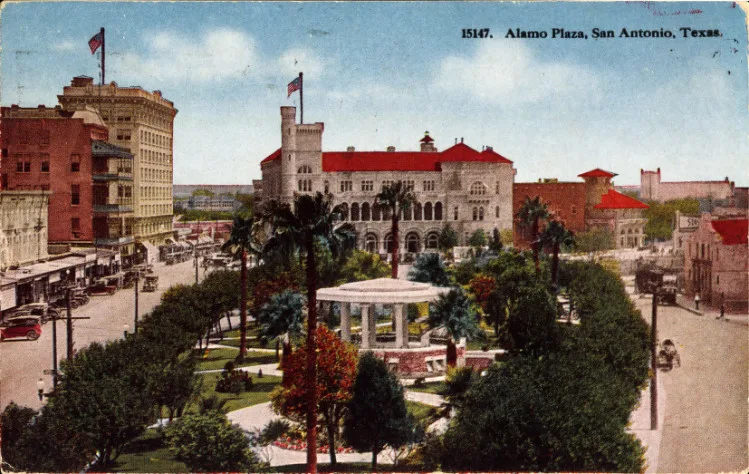
Alamo Plaza Historic District covers the commercial heart of downtown San Antonio around the Alamo chapel. The plaza was once the courtyard of Mission San Antonio de Valero, founded in 1724. After the 1836 battle, squatters and later the army used the ruins. The city created the present open space in 1871 by acquiring the old granary and merging the courtyard with the Plaza de Valero. Most surrounding buildings date from the late 19th century, when leading firms opened stores here. They include the Menger Hotel, the Crockett Block, the Reuter and Moore buildings, the Turn Verein of 1891, the 1937 Post Office and the 1926 Medical Arts Building. A 1940 Cenotaph honors the Alamo defenders. Many Victorian facades were covered by mid-20th century plaster and alterations, yet the district keeps a uniform scale of one to four stories on most sides. Its listing recognizes the setting around the shrine and the potential to restore the historic streetscape.
Machine-generated summary. This summary was generated by a language model from the official nomination document and has not been reviewed line by line by an editor. It may contain errors. Check the source document before relying on any detail. Source: nomination document (PDF) · catalog entry. Generated October 2026 (model claude-sonnet-5-5, prompt v1.0-2026-10-29).
| Styles | Mixed commercial styles: Victorian-Italianate, Renaissance Revival, Chateauesque, Commercial Style |
|---|---|
| Areas of significance | Community Planning and Development, Commerce, Military, Transportation, Architecture, Religion |
| Acreage | 30 |
| Boundary source | NPS cultural-resource GIS polygon |
| Full listing page | Alamo Plaza Historic District (property record) |
What listing means for this property
This is a historic district. Buildings within its boundary are either contributing (they add to the district's significance) or non-contributing. Owners of contributing income-producing buildings can claim the 20% federal rehabilitation tax credit; homeowners should look at state credits. National Register districts impose no design review by themselves; a local historic district ordinance, if one exists, does (the difference explained).
General information, not legal or tax advice. Rules change; confirm with your State Historic Preservation Office or a qualified adviser.