York Historic District

Why it's listed
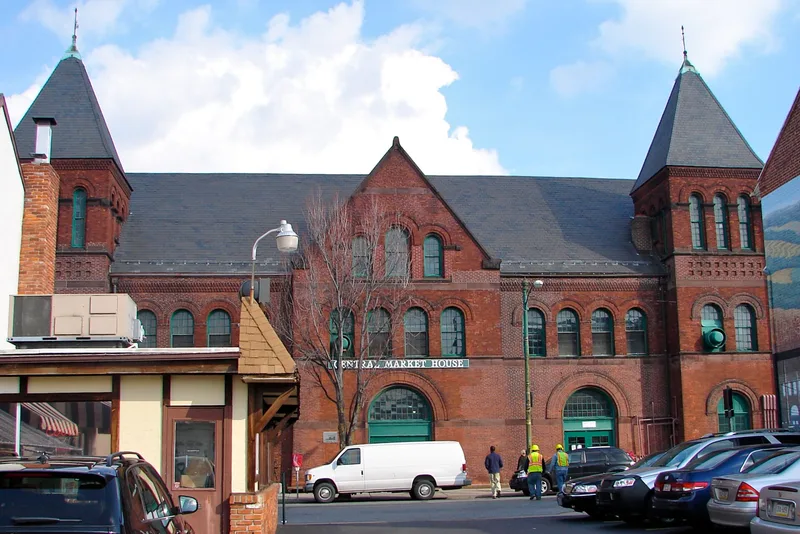
York's historic district is a large, largely intact city center in York, Pennsylvania, built mainly between the mid-1800s and the early 1900s. Its commercial core along George, Market and Philadelphia Streets holds late 19th and early 20th century buildings, including Chicago style and cast iron fronted blocks, while side streets hold brick Victorian row houses with bay windows. The district is significant for its links to the 1777-1778 period when the Continental Congress sat in York, and for its industrial past, with factories, foundries and worker housing along the Codorus Creek corridor. Its buildings include the 1812 Christ Lutheran Church, the 1850 Odd Fellows Hall, and the Dempwolf-designed county courthouse of 1898. Several 18th century survivors, among them the Gates House, the Golden Plough Tavern and the Friends Meeting House, remain. The nomination also extends the period of significance to 1953 to cover commercial, industrial and governmental growth during the 1930s and 1940s.
Machine-generated summary. This summary was generated by a language model from the official nomination document and has not been reviewed line by line by an editor. It may contain errors. Check the source document before relying on any detail. Source: nomination document (PDF) · catalog entry. Generated October 2026 (model claude-haiku-5-5, prompt v1.1-2026-10-29).
| Period of significance | 1741-1953 |
|---|---|
| Styles | Victorian |
| Areas of significance | Industry, Commerce, Politics/Government, Architecture |
| Acreage | 714 |
| Boundary source | NPS cultural-resource GIS polygon |
| Full listing page | York Historic District (property record) |
What listing means for this property
This is a historic district. Buildings within its boundary are either contributing (they add to the district's significance) or non-contributing. Owners of contributing income-producing buildings can claim the 20% federal rehabilitation tax credit; homeowners should look at state credits. National Register districts impose no design review by themselves; a local historic district ordinance, if one exists, does (the difference explained).
General information, not legal or tax advice. Rules change; confirm with your State Historic Preservation Office or a qualified adviser.