Spring Garden District

Why it's listed
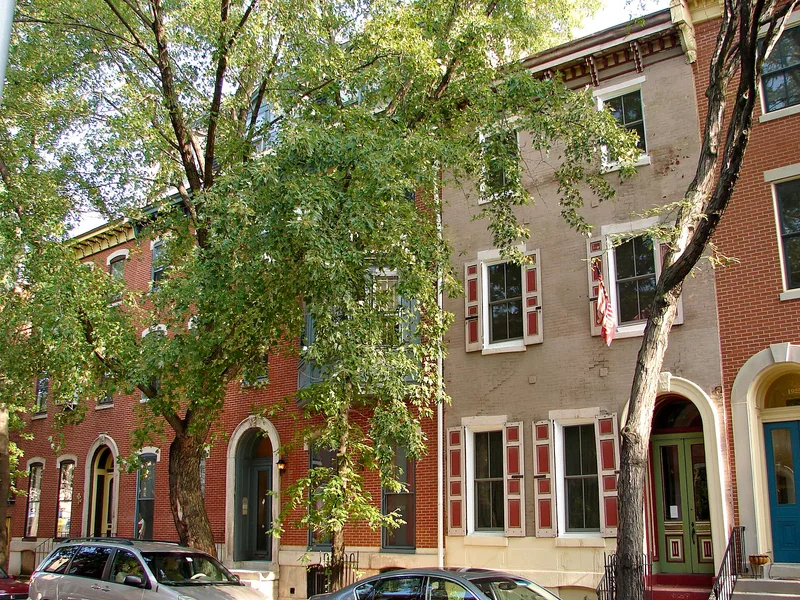
Spring Garden is a residential district on the edge of Fairmount Park and central Philadelphia, built largely between about 1850 and 1900. Its core is three-story brick rowhouses with pressed-brick facades, marble trim, flat bracketed cornices and distinctive cast ironwork, many put up by speculative builders in groups as large as a full block. Approximately 300 were built by one firm, Randolph and Parry, local lumber merchants. Later, wealthier residents commissioned individually designed brownstone houses and churches, including work by Willis G. Hale, James H. Windrim, Samuel Sloan, and Wilson Eyre, Jr. Interiors retain high ceilings, painted pine woodwork and gas lighting. The district is regarded as the best surviving example in Philadelphia of the neighborhoods that the expanding urban middle class created in the mid to late 19th century. It is also among the city's earliest large-scale residential developments, and it shows how rowhouse design could be varied for different households.
Machine-generated summary. This summary was generated by a language model from the official nomination document and has not been reviewed line by line by an editor. It may contain errors. Check the source document before relying on any detail. Source: nomination document (PDF) · catalog entry. Generated October 2026 (model claude-haiku-5-5, prompt v1.1-2026-10-29).
| Period of significance | 1800-1899 |
|---|---|
| Styles | Mid-Victorian row house with Renaissance Revival motifs; later individually designed houses in High Victorian and other late 19th-century styles |
| Areas of significance | Community Planning and Development, Architecture |
| Acreage | 87 |
| Boundary source | NPS cultural-resource GIS polygon |
| Full listing page | Spring Garden District (property record) |
What listing means for this property
This is a historic district. Buildings within its boundary are either contributing (they add to the district's significance) or non-contributing. Owners of contributing income-producing buildings can claim the 20% federal rehabilitation tax credit; homeowners should look at state credits. National Register districts impose no design review by themselves; a local historic district ordinance, if one exists, does (the difference explained).
General information, not legal or tax advice. Rules change; confirm with your State Historic Preservation Office or a qualified adviser.