Queen Anne Historic District

Why it's listed
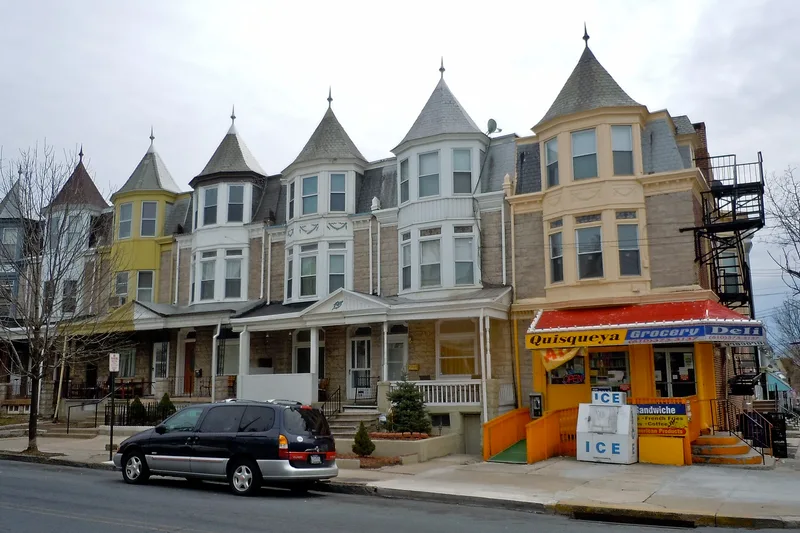
Located in northwest Reading, this district is a concentration of semi-detached houses, rowhouses, churches and small shops built mainly between 1880 and 1925. Its streets follow a compass-point grid laid out after the city's 1870s street survey, and the homes were largely financed by local building and loan associations that helped working families become owners. Houses range from modest blue-collar rows near the railroad to larger double and single houses on the north side, many with Queen Anne detailing, bay windows and porches. Churches include Emmanuel Baptist, dating from 1885, and Wesley United Methodist, dating from 1922, and most of the churches share a Gothic Revival design. Corner grocery stores and neighborhood theaters once served residents within walking distance. The district is regarded as a surviving example of an urban working and middle class neighborhood, with much of its original streetscape still intact despite siding replacements on many houses.
Machine-generated summary. This summary was generated by a language model from the official nomination document and has not been reviewed line by line by an editor. It may contain errors. Check the source document before relying on any detail. Source: nomination document (PDF) · catalog entry. Generated October 2026 (model claude-haiku-5-5, prompt v1.1-2026-10-29).
| Period of significance | 1880-1925 |
|---|---|
| Styles | Late Victorian: Queen Anne; with Italianate, Gothic Revival and Reading German influences noted |
| Areas of significance | Architecture |
| Acreage | 160 |
| Boundary source | NPS cultural-resource GIS polygon |
| Full listing page | Queen Anne Historic District (property record) |
What listing means for this property
This is a historic district. Buildings within its boundary are either contributing (they add to the district's significance) or non-contributing. Owners of contributing income-producing buildings can claim the 20% federal rehabilitation tax credit; homeowners should look at state credits. National Register districts impose no design review by themselves; a local historic district ordinance, if one exists, does (the difference explained).
General information, not legal or tax advice. Rules change; confirm with your State Historic Preservation Office or a qualified adviser.