Pine Forge Mansion and Industrial Site

Why it's listed
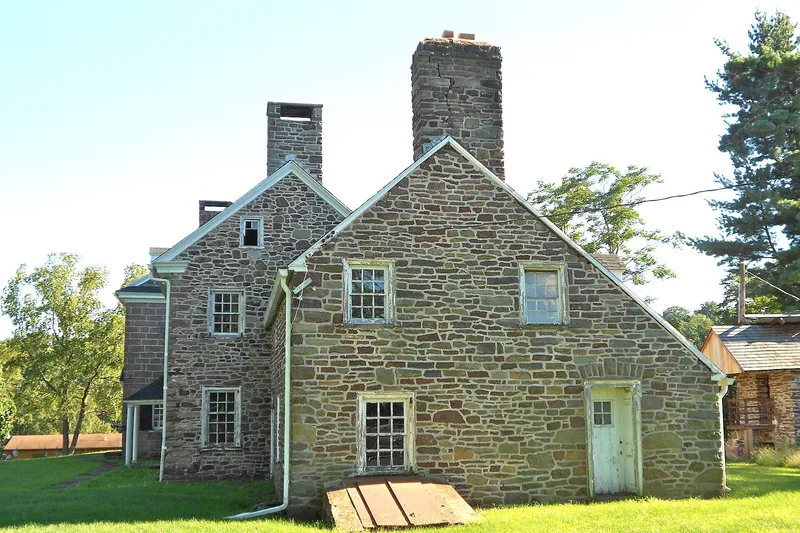
Built as part of an early 18th-century iron plantation beside Manatawny Creek in Douglass Township, Berks County, the Pine Forge complex centers on a sprawling stone mansion. Its earliest section, the two-story center block, dates to about 1730, and a south wing was added around 1800 in Georgian style. Thomas Rutter acquired the land in 1714 and 1715 and established a bloomery forge, and by 1720 his finery forge, later called Pine Forge, was operating on the site. Over the following century the property passed to the Potts and Rutter families and then to Joseph Bailey, who converted the forge to a rolling mill in 1845. Early 20th-century Colonial Revival work by architect R. Brognard Okie added a north wing about 1918. The surviving stone mansion, outbuildings, and millrace remains show the site's industrial and architectural history and are the basis for its listing.
Machine-generated summary. This summary was generated by a language model from the official nomination document and has not been reviewed line by line by an editor. It may contain errors. Check the source document before relying on any detail. Source: nomination document (PDF) · catalog entry. Generated October 2026 (model claude-haiku-5-5, prompt v1.1-2026-10-29).
| Period of significance | 1720-1930 |
|---|---|
| Styles | Colonial / Georgian/Federal; Early 20th Century Revival / Colonial |
| Areas of significance | Industry, Architecture |
| Acreage | 24 |
| Boundary source | NPS cultural-resource GIS polygon |
| Full listing page | Pine Forge Mansion and Industrial Site (property record) |
What listing means for this property
This is a historic district. Buildings within its boundary are either contributing (they add to the district's significance) or non-contributing. Owners of contributing income-producing buildings can claim the 20% federal rehabilitation tax credit; homeowners should look at state credits. National Register districts impose no design review by themselves; a local historic district ordinance, if one exists, does (the difference explained).
General information, not legal or tax advice. Rules change; confirm with your State Historic Preservation Office or a qualified adviser.