Guldin Mill

Why it's listed
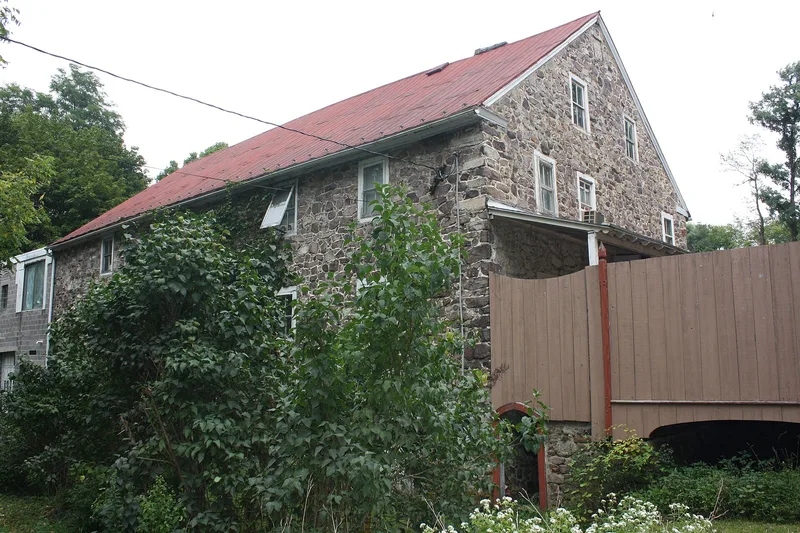
Built of limestone, the Guldin Mill stands on Guldin Creek east of Blandon and combines a house and a gristmill under one roof. The house section bears a datestone of 1781 and has a center chimney and a three-room plan typical of Germanic building. The mill section, dated 1822 by its datestone, is one of the largest and most fully equipped mills in the county. Its interior holds two pairs of French buhr millstones, a turbine system, roller mills from the late nineteenth century, and early tentering gear. The nomination notes that the mill's wooden shafts and bearings from its earlier vertical water wheels survive, and that the building shows the change from meal bin to bucket elevator. Milling continued into the 1950s, and the mill is valued for documenting European folk practices among colonial settlers and the history of mill engineering.
Machine-generated summary. This summary was generated by a language model from the official nomination document and has not been reviewed line by line by an editor. It may contain errors. Check the source document before relying on any detail. Source: nomination document (PDF) · catalog entry. Generated October 2026 (model claude-haiku-5-5, prompt v1.1-2026-10-29).
| Period of significance | 1781-1940 |
|---|---|
| Styles | Germanic center-chimney style |
| Areas of significance | Industry, Engineering, Architecture |
| Acreage | 7 |
| Boundary source | NPS cultural-resource GIS polygon |
| Full listing page | Guldin Mill (property record) |
What listing means for this property
This is a historic district. Buildings within its boundary are either contributing (they add to the district's significance) or non-contributing. Owners of contributing income-producing buildings can claim the 20% federal rehabilitation tax credit; homeowners should look at state credits. National Register districts impose no design review by themselves; a local historic district ordinance, if one exists, does (the difference explained).
General information, not legal or tax advice. Rules change; confirm with your State Historic Preservation Office or a qualified adviser.