East Lancaster Avenue Historic District

Why it's listed
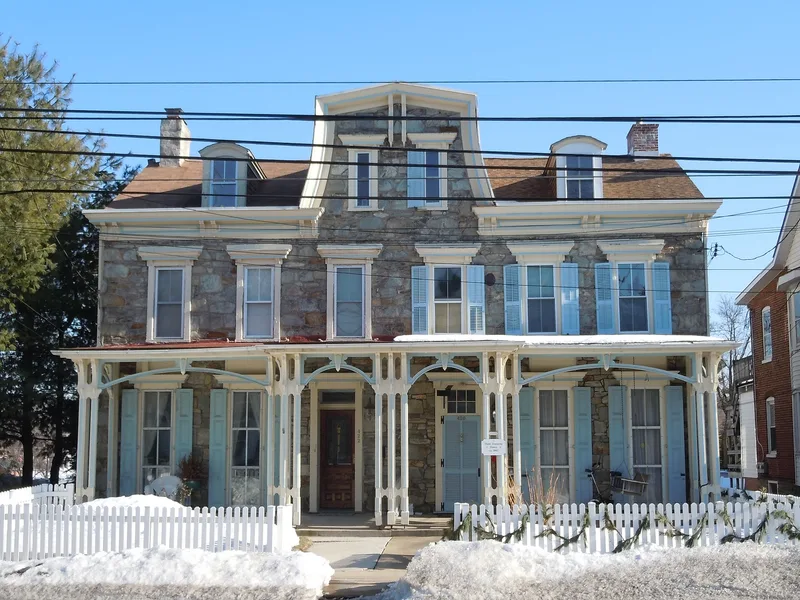
East Lancaster Avenue in Downingtown is a street of about 142 properties running 1.1 miles from the Brandywine Creek to the town's eastern boundary. Its buildings range from a round log house built c. 1700 beside the creek to Georgian stone houses dating from c. 1729 to 1804, Federal and Italianate commercial blocks of the 19th century, and bungalows built at the start of the 20th century. The George Washington Inn anchored the first commercial core, and the street grew up around its stagecoach traffic. Its position halfway between Lancaster and Philadelphia made it a stop on the route, and it supported the Philadelphia and Lancaster Turnpike in the 1790s. Local limestone quarried nearby was the principal building material for the Georgian and Federal houses. Most of the street's facades have been kept largely intact, which gives the district its unusually unchanged streetscape.
Machine-generated summary. This summary was generated by a language model from the official nomination document and has not been reviewed line by line by an editor. It may contain errors. Check the source document before relying on any detail. Source: nomination document (PDF) · catalog entry. Generated October 2026 (model claude-haiku-5-5, prompt v1.1-2026-10-29).
| Period of significance | 1700-1940 |
|---|---|
| Styles | Georgian, Federal, Italianate Villa, Queen Anne, Gothic Revival, Bungalow |
| Areas of significance | Commerce, Transportation, Architecture |
| Acreage | 51.3 |
| Boundary source | NPS cultural-resource GIS polygon |
| Full listing page | East Lancaster Avenue Historic District (property record) |
What listing means for this property
This is a historic district. Buildings within its boundary are either contributing (they add to the district's significance) or non-contributing. Owners of contributing income-producing buildings can claim the 20% federal rehabilitation tax credit; homeowners should look at state credits. National Register districts impose no design review by themselves; a local historic district ordinance, if one exists, does (the difference explained).
General information, not legal or tax advice. Rules change; confirm with your State Historic Preservation Office or a qualified adviser.