Wade Park District

Why it's listed
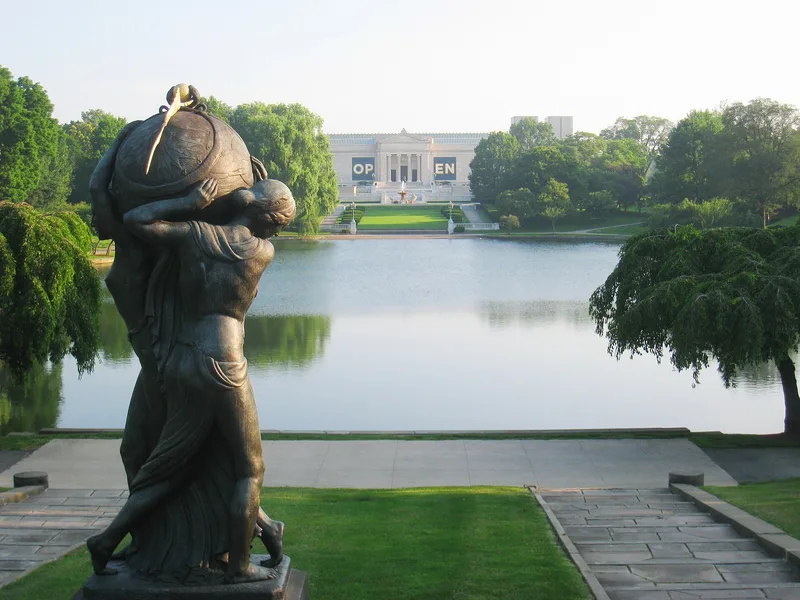
Wade Park is a 65-acre district at the center of University Circle in Cleveland, made up of greenways, landscaped gardens, a lagoon and the buildings that face them. Jeptha H. Wade, a founder of Western Union, gave the land to the city in 1882 and later set aside a tract for an art gallery. The Cleveland Museum of Art opened there in 1916. Other major buildings followed, including the Fourth Church of Christ Scientist (1918-1920), The Temple (1924), Epworth-Euclid Methodist Church (1928), two luxury residential hotels (1923) and Severance Hall (1931). The Fine Arts Garden, designed by the Olmsted Brothers firm, was carried out in 1927-1928. The district also holds sculpture by Auguste Rodin and Augustus Saint-Gaudens. Three later buildings from 1966 to 1971 are judged compatible with the setting. The district is significant for its architecture, landscape architecture and sculpture, and as an example of cultural center planning.
Machine-generated summary. This summary was generated by a language model from the official nomination document and has not been reviewed line by line by an editor. It may contain errors. Check the source document before relying on any detail. Source: nomination document (PDF) · catalog entry. Generated October 2026 (model claude-sonnet-5-5, prompt v1.0-2026-10-29).
| Period of significance | 1882-1931 |
|---|---|
| Styles | Mixed: Neo-Classic, Georgian Revival, French Renaissance eclectic, Modernistic-Gothic, late Romanesque revival, modern classical mannerism with Art Deco interiors; romantic-style landscape |
| Areas of significance | Landscape Architecture, Art, Architecture |
| Acreage | 65 |
| Boundary source | NPS cultural-resource GIS polygon |
| Full listing page | Wade Park District (property record) |
What listing means for this property
This is a historic district. Buildings within its boundary are either contributing (they add to the district's significance) or non-contributing. Owners of contributing income-producing buildings can claim the 20% federal rehabilitation tax credit; homeowners should look at state credits. National Register districts impose no design review by themselves; a local historic district ordinance, if one exists, does (the difference explained).
General information, not legal or tax advice. Rules change; confirm with your State Historic Preservation Office or a qualified adviser.