Union Baptist Cemetery (Additional Documentation)

Why it's listed
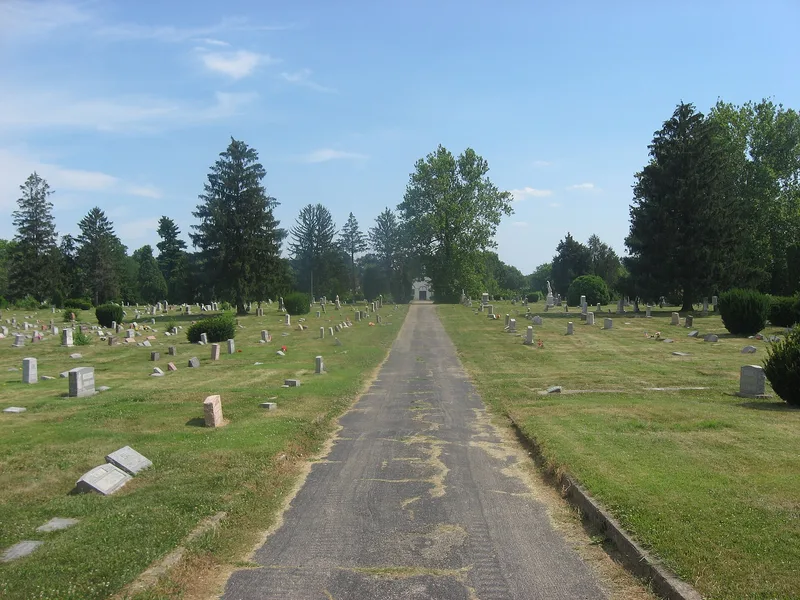
Union Baptist Cemetery is a 16-acre burial ground on a hilltop in Cincinnati's Price Hill neighborhood, about five miles west of downtown. The Union Baptist Church bought the land in 1865, though a plaque at the entrance gives 1864 as the founding year. The grounds have aged fir trees, a chain link fence, a central drive and two yellow brick gateposts with bronze plaques. A concrete block office building from 1951 sits in an oval drive near the center. It has arched brick hoodmolds and an octagonal belfry, so it resembles a rural chapel. The church grew from fourteen Black and mixed-race members who left the white Enon Baptist Church in 1831, and the cemetery serves as its burial ground. Interments include pastors, the Fossett family, Civil War veterans such as Sgt. Powhatan Beaty, and the relocated 1838 sandstone marker of Rev. David Nickens. The site is significant for its links to social history and African American heritage in Cincinnati.
Machine-generated summary. This summary was generated by a language model from the official nomination document and has not been reviewed line by line by an editor. It may contain errors. Check the source document before relying on any detail. Source: nomination document (PDF) · catalog entry. Generated October 2026 (model claude-sonnet-5-5, prompt v1.0-2026-10-29).
| Period of significance | 1864-1952 |
|---|---|
| Areas of significance | Ethnic Heritage-Black, Social History |
| Acreage | 16 |
| Boundary source | NPS cultural-resource GIS polygon |
| Full listing page | Union Baptist Cemetery (Additional Documentation) (property record) |
What listing means for this property
This is a historic district. Buildings within its boundary are either contributing (they add to the district's significance) or non-contributing. Owners of contributing income-producing buildings can claim the 20% federal rehabilitation tax credit; homeowners should look at state credits. National Register districts impose no design review by themselves; a local historic district ordinance, if one exists, does (the difference explained).
General information, not legal or tax advice. Rules change; confirm with your State Historic Preservation Office or a qualified adviser.