Sycamore-13th Street Grouping

Why it's listed
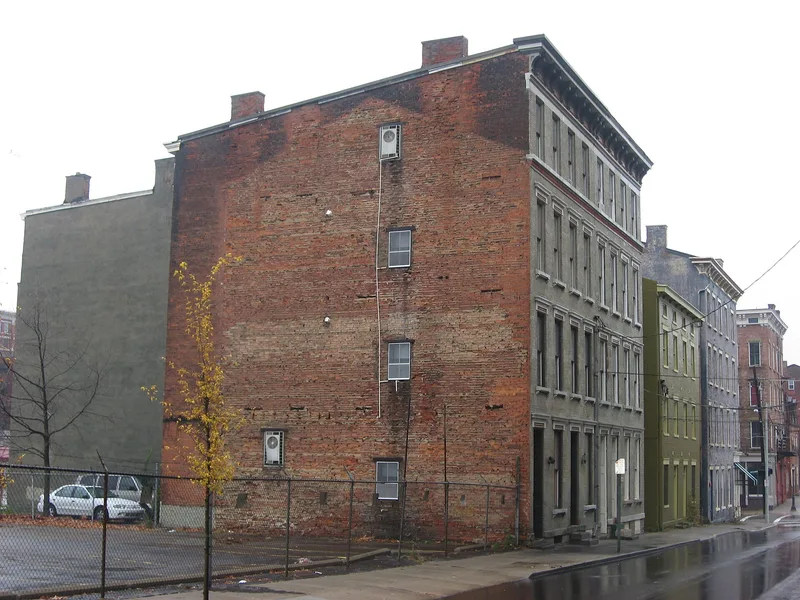
Eighteen brick buildings around Sycamore, 12th and 13th Streets in Cincinnati's Over-the-Rhine neighborhood make up this small district, dating from about 1853 to 1886. Most are tenements and mixed commercial/residential structures, rising three to five stories on narrow lots. Functional vernacular is the most common style, while Italianate buildings on Sycamore have incised lintels, bracketed sills and cornices. One Queen Anne building has a cast iron storefront, and another shows muted Greek Revival influence. Many were likely built from carpenter-book plans by the city's builders, stone cutters and metal cornice workers. Storefronts on Sycamore housed a blacksmith, a stonemason's display and a plumbing contractor, while dressmaking and tailoring were done in homes. Census data show a working-class German population. Some buildings have structural damage and missing details, but similar materials, scale and land use give the group a unified streetscape. A rehabilitation plan for office use was underway when it was listed.
Machine-generated summary. This summary was generated by a language model from the official nomination document and has not been reviewed line by line by an editor. It may contain errors. Check the source document before relying on any detail. Source: nomination document (PDF) · catalog entry. Generated October 2026 (model claude-sonnet-5-5, prompt v1.0-2026-10-29).
| Period of significance | 1853 to c. 1886 |
|---|---|
| Styles | Functional Vernacular, Italianate, Queen Anne, Greek Revival influence |
| Areas of significance | Architecture |
| Acreage | 1.5 |
| Boundary source | NPS cultural-resource GIS polygon |
| Full listing page | Sycamore-13th Street Grouping (property record) |
What listing means for this property
This is a historic district. Buildings within its boundary are either contributing (they add to the district's significance) or non-contributing. Owners of contributing income-producing buildings can claim the 20% federal rehabilitation tax credit; homeowners should look at state credits. National Register districts impose no design review by themselves; a local historic district ordinance, if one exists, does (the difference explained).
General information, not legal or tax advice. Rules change; confirm with your State Historic Preservation Office or a qualified adviser.