Spring Grove Cemetery

Why it's listed
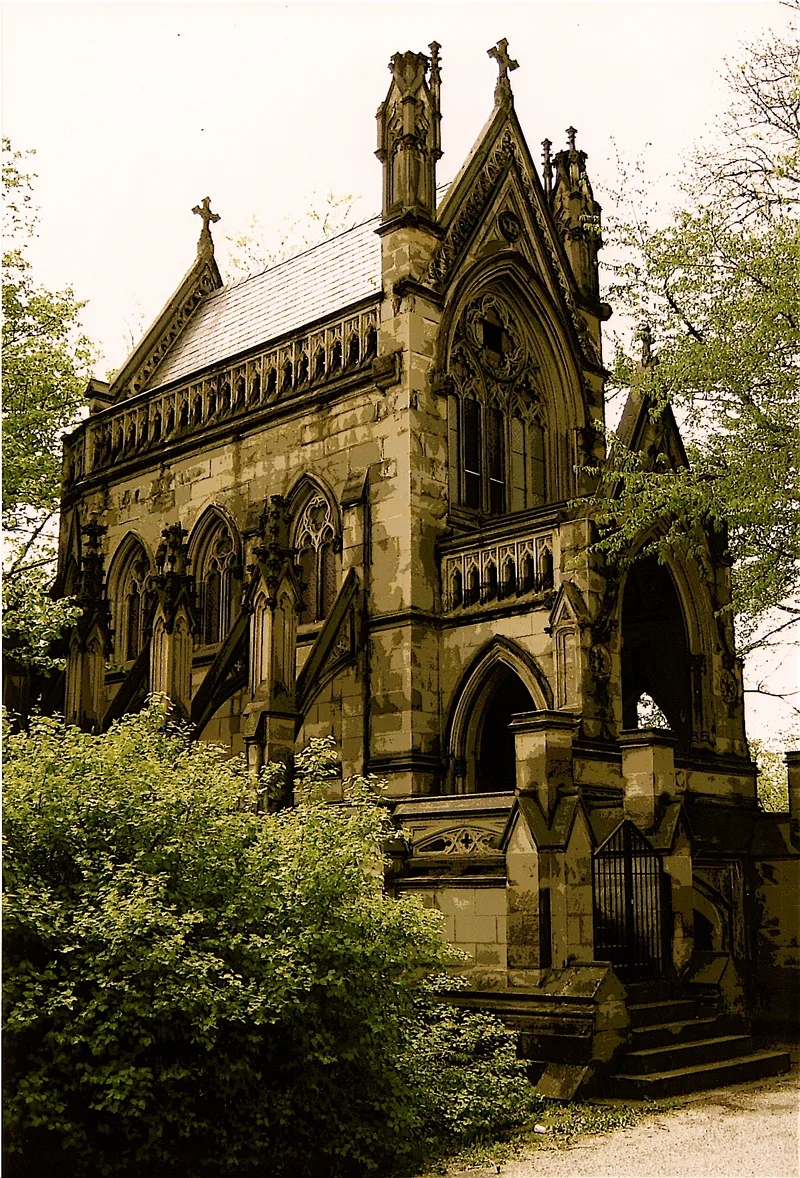
Spring Grove Cemetery covers 166 acres in Cincinnati and is known for introducing the lawn plan of cemetery design. Chartered in 1845 after cholera epidemics strained burial facilities, it first followed a traditional layout of many roads, fenced family plots and multiple markers. In 1855 Adolph Strauch became superintendent and reshaped it. He removed hedges and fences, limited each lot to one monument, laid out roads following the contours of the land, widened the main entrance road to 120 feet and turned spring-fed swamps into five acres of ornamental lakes. His methods were later adopted internationally. The grounds hold notable architecture, including the Norman Gothic main gates by James Keys Wilson, a Romanesque Revival chapel by Samuel Hannaford, the 1859 Public Vault by Alfred Mullet, and private mausoleums in Gothic, Greek Doric and Baroque-influenced styles such as the Fleischmann and Burnet monuments. These structures are placed among smaller monuments to achieve the pictorial harmony Strauch sought.
Machine-generated summary. This summary was generated by a language model from the official nomination document and has not been reviewed line by line by an editor. It may contain errors. Check the source document before relying on any detail. Source: nomination document (PDF) · catalog entry. Generated October 2026 (model claude-sonnet-5-5, prompt v1.0-2026-10-29).
| Period of significance | 1855-1883 |
|---|---|
| Styles | Norman Gothic (main gates); Romanesque Revival (chapel, public vault); Gothic, Greek Doric and Baroque-flavored mausoleums |
| Areas of significance | Landscape Architecture, Architecture |
| Acreage | 345 |
| Boundary source | NPS cultural-resource GIS polygon |
| Full listing page | Spring Grove Cemetery (property record) |
What listing means for this property
This is a historic district. Buildings within its boundary are either contributing (they add to the district's significance) or non-contributing. Owners of contributing income-producing buildings can claim the 20% federal rehabilitation tax credit; homeowners should look at state credits. National Register districts impose no design review by themselves; a local historic district ordinance, if one exists, does (the difference explained).
General information, not legal or tax advice. Rules change; confirm with your State Historic Preservation Office or a qualified adviser.