Mount Airy Forest

Why it's listed
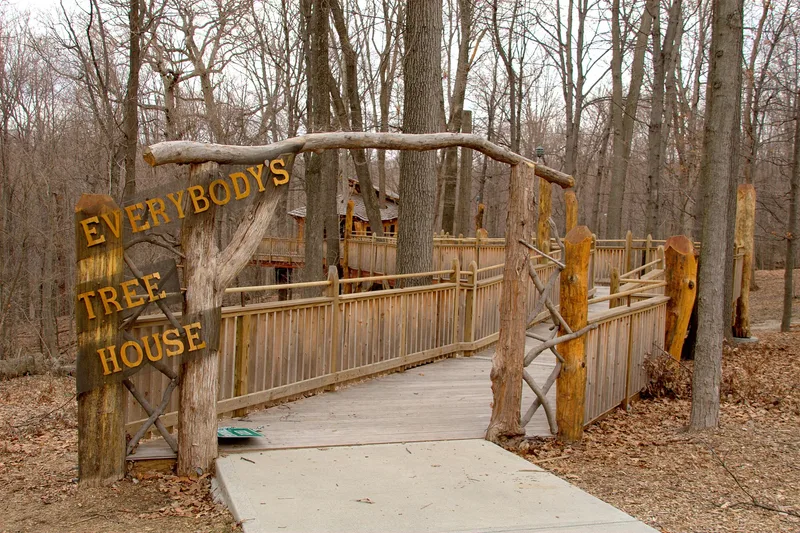
Mount Airy Forest is a 1,471-acre park roughly four miles northwest of downtown Cincinnati. The Cincinnati Park Board began buying worn-out farmland there in 1911 and started what is described as the first municipal reforestation project in the nation. Hardwoods, evergreens, meadows and an arboretum now cover land once scarred by erosion and grazing. Most construction took place between 1931 and 1959, much of it during the Depression with federal relief programs and Civilian Conservation Corps labor. The park holds eight open shelters, eight comfort stations, three lodges, a concession building, service buildings and a CCC camp that housed 200 African-American workers. Built of native stone and heavy timber, the structures follow a rustic style, and a dozen were designed by park architect R. Carl Freund. Interstate 74 divides the park and is counted as noncontributing, along with one recent shelter. The district includes 35 contributing resources.
Machine-generated summary. This summary was generated by a language model from the official nomination document and has not been reviewed line by line by an editor. It may contain errors. Check the source document before relying on any detail. Source: nomination document (PDF) · catalog entry. Generated October 2026 (model claude-sonnet-5-5, prompt v1.0-2026-10-29).
| Period of significance | 1911-1956 |
|---|---|
| Styles | Other - Rustic park style |
| Areas of significance | Architecture, Landscape Architecture, Social History, Entertainment/Recreation |
| Acreage | 1471 |
| Boundary source | NPS cultural-resource GIS polygon |
| Full listing page | Mount Airy Forest (property record) |
What listing means for this property
This is a historic district. Buildings within its boundary are either contributing (they add to the district's significance) or non-contributing. Owners of contributing income-producing buildings can claim the 20% federal rehabilitation tax credit; homeowners should look at state credits. National Register districts impose no design review by themselves; a local historic district ordinance, if one exists, does (the difference explained).
General information, not legal or tax advice. Rules change; confirm with your State Historic Preservation Office or a qualified adviser.