Kendall, Virginia, State Park Historic District

Why it's listed
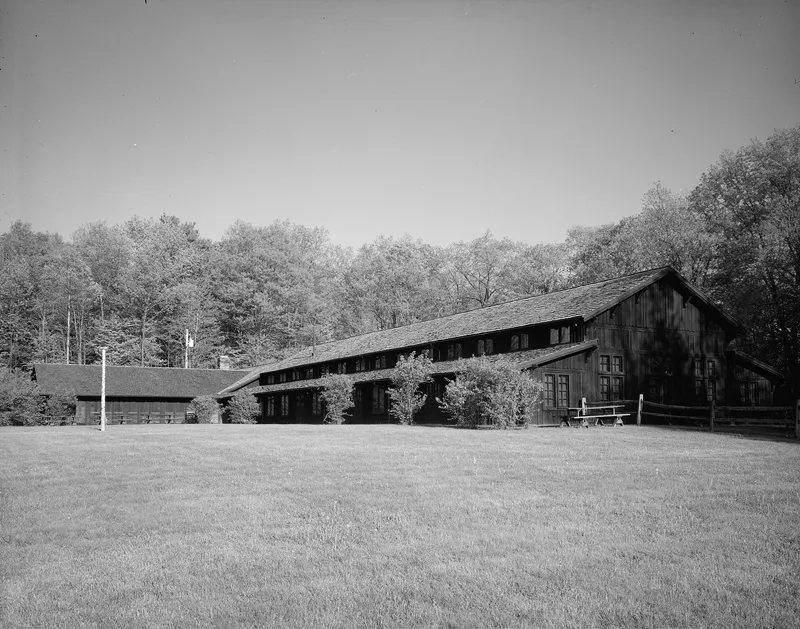
Virginia Kendall State Park Historic District covers about 530 acres near Peninsula, Ohio, where a landscape of shelters, trails and meadows was built around the sandstone Ritchie Ledges. Civilian Conservation Corps enrollees did the work from 1933, following a master plan that linked the Ledges, Octagon and Lake shelter areas and the Happy Days Day Camp with curving foot trails and open playsteads. The buildings use a Rustic style, with wormy chestnut walls, board and batten siding, fieldstone chimneys and wood shingle roofs. The Happy Days Day Camp, built in 1938, is now a visitor center. Later changes, including the 1979 redesign of drives and parking areas, did not erase the overall design. The district was listed for its architecture, landscape design, recreation history and its link to a federal program that gave unemployed young men work, with significance running from 1933 to 1945.
Machine-generated summary. This summary was generated by a language model from the official nomination document and has not been reviewed line by line by an editor. It may contain errors. Check the source document before relying on any detail. Source: nomination document (PDF) · catalog entry. Generated October 2026 (model claude-sonnet-5-5, prompt v1.0-2026-10-29).
| Period of significance | 1933 - 1945 |
|---|---|
| Styles | Late 19th and Early 20th Century American Movements: Rustic |
| Areas of significance | Architecture, Landscape Architecture, Entertainment/Recreation, Politics/Government, Social History |
| Acreage | 530 |
| Boundary source | NPS cultural-resource GIS polygon |
| Full listing page | Kendall, Virginia, State Park Historic District (property record) |
What listing means for this property
This is a historic district. Buildings within its boundary are either contributing (they add to the district's significance) or non-contributing. Owners of contributing income-producing buildings can claim the 20% federal rehabilitation tax credit; homeowners should look at state credits. National Register districts impose no design review by themselves; a local historic district ordinance, if one exists, does (the difference explained).
General information, not legal or tax advice. Rules change; confirm with your State Historic Preservation Office or a qualified adviser.