Fairmount Boulevard District

Why it's listed
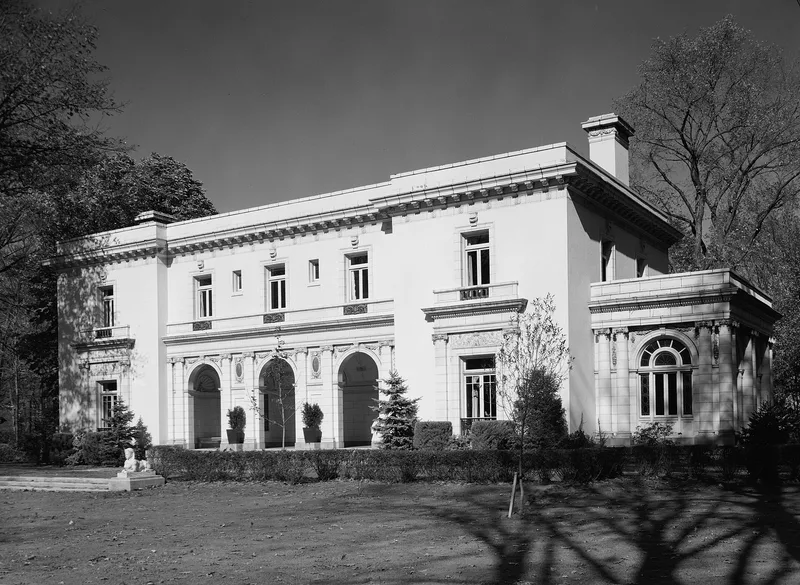
Fairmount Boulevard in Cleveland Heights is a 1.7-mile residential street climbing from Cedar Road to Wellington Road, with a 120-foot-wide roadbed, massive curbstones and a sixty-foot landscaped median that once carried streetcar tracks. About 101 houses and two churches line it, all following the same deed restrictions and setback lines. Styles range from Elizabethan and Jacobean to Georgian, Cotswold and Renaissance Revival. Land that was once Shaker farmland and part of a Rockefeller-owned golf club property was developed by the Shaker Heights Land Company, the Van Sweringens and the Deming Realty. Most building followed World War I. The district was listed as a notably cohesive example of controlled suburban planning in the early twentieth century. Its first residents were prominent Cleveland business and civic leaders, and architects such as Walker and Weeks, Mead and Hamilton, and Charles Schneider designed homes there, with gardens by firms including the Olmsted Brothers.
Machine-generated summary. This summary was generated by a language model from the official nomination document and has not been reviewed line by line by an editor. It may contain errors. Check the source document before relying on any detail. Source: nomination document (PDF) · catalog entry. Generated October 2026 (model claude-sonnet-5-5, prompt v1.0-2026-10-29).
| Period of significance | 1904-1925 |
|---|---|
| Styles | Mixed revival styles including Elizabethan, Jacobean, Tudor, Georgian, French Normandy, Cotswold, Late Gothic Revival and Renaissance Revival |
| Areas of significance | Community Planning and Development, Landscape Architecture, Architecture |
| Acreage | 130 |
| Boundary source | NPS cultural-resource GIS polygon |
| Full listing page | Fairmount Boulevard District (property record) |
What listing means for this property
This is a historic district. Buildings within its boundary are either contributing (they add to the district's significance) or non-contributing. Owners of contributing income-producing buildings can claim the 20% federal rehabilitation tax credit; homeowners should look at state credits. National Register districts impose no design review by themselves; a local historic district ordinance, if one exists, does (the difference explained).
General information, not legal or tax advice. Rules change; confirm with your State Historic Preservation Office or a qualified adviser.