Dayton Street Historic District

Why it's listed
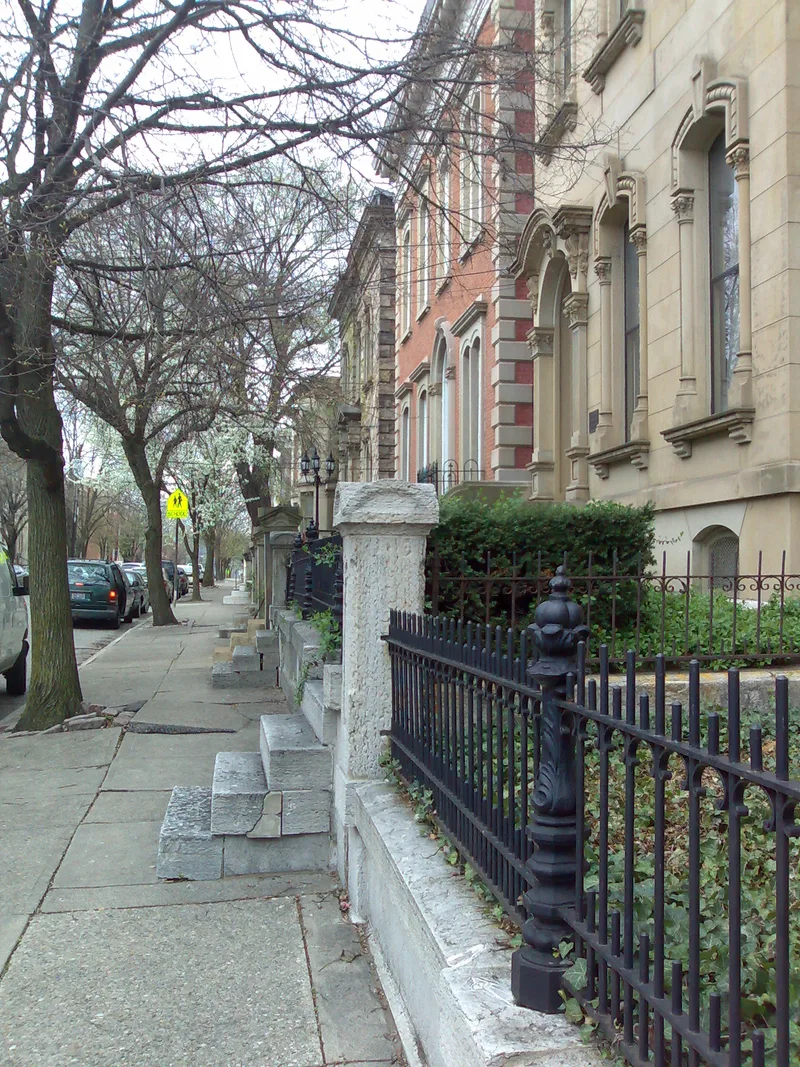
Dayton Street in Cincinnati is the core of a district of about 67 acres bounded by Bank Street, Linn Street, Poplar Street and Winchell Avenue. The blocks hold detached nineteenth-century town houses, mostly masonry, two or three stories high, and Italianate in style. Most were built between 1850 and 1890, and the area was known as the residential quarter of wealthy brewers and pork packers. Remnants of cast iron fences, limestone retaining walls and lattice side yard gates survive. Notable houses include the John Hauck House, built in 1870 by George W. Skaats and later owned by brewer John Hauck, who rescued the Cincinnati Zoological Garden. The George Hatch House, probably built in 1851 or 1852, is described as the largest mansion in the area. The Andrew Hickenlooper House, built in 1871, represents the typical side hall plan. The district was listed for its architecture and for the cohesive character of its streetscape, which saw little modern encroachment. Most of its development took place between 1860 and 1880.
Machine-generated summary. This summary was generated by a language model from the official nomination document and has not been reviewed line by line by an editor. It may contain errors. Check the source document before relying on any detail. Source: nomination document (PDF) · catalog entry. Generated October 2026 (model claude-sonnet-5-5, prompt v1.0-2026-10-29).
| Period of significance | 1860-1880 |
|---|---|
| Styles | Italianate |
| Areas of significance | Community Planning and Development, Architecture |
| Acreage | 67 |
| Boundary source | NPS cultural-resource GIS polygon |
| Full listing page | Dayton Street Historic District (property record) |
What listing means for this property
This is a historic district. Buildings within its boundary are either contributing (they add to the district's significance) or non-contributing. Owners of contributing income-producing buildings can claim the 20% federal rehabilitation tax credit; homeowners should look at state credits. National Register districts impose no design review by themselves; a local historic district ordinance, if one exists, does (the difference explained).
General information, not legal or tax advice. Rules change; confirm with your State Historic Preservation Office or a qualified adviser.