Williamston Historic District

Why it's listed
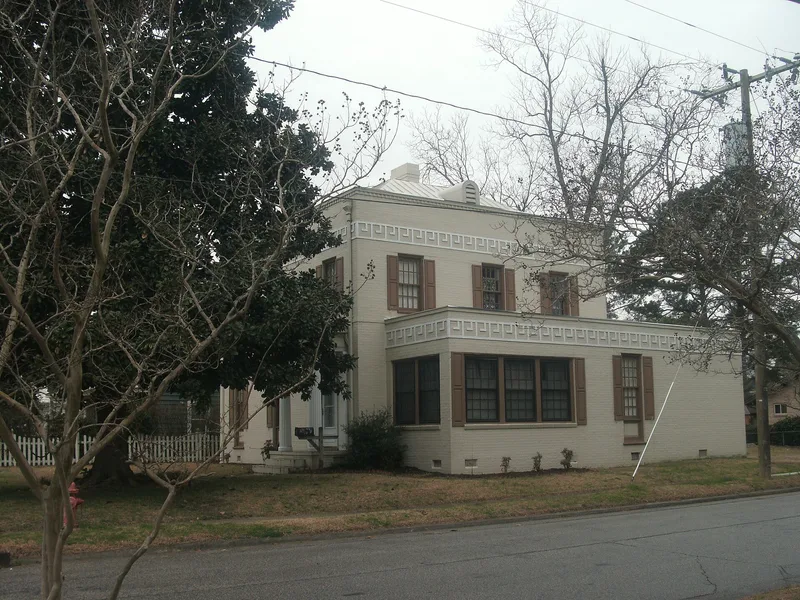
Williamston Historic District covers the historic residential neighborhoods of Williamston, the county seat of Martin County in North Carolina's northern coastal plain. Spread over roughly forty-two blocks near the Roanoke River, it contains 609 resources, of which 396 contribute. About 94 percent are dwellings and their outbuildings, mostly frame houses. Seven predate the Civil War, led by the 1812 Hyman-Rhodes House and the 1847-1848 Greek Revival Cushing Biggs Hassell House, built by master builder Albert Gamaliel Jones. Later neighborhoods add Italianate, Queen Anne, Craftsman bungalow and many Colonial Revival houses, including brick examples of the 1930s, one designed by architect Charles Collins Benton. The 1915 Gardner-Edmondson House was the first brick house in town. Churches, schools and county government buildings on East Church Street also sit within the boundaries. The district was recognized for the integrity and variety of its architecture, with only a small share of primary resources altered enough to lose contributing status.
Machine-generated summary. This summary was generated by a language model from the official nomination document and has not been reviewed line by line by an editor. It may contain errors. Check the source document before relying on any detail. Source: nomination document (PDF) · catalog entry. Generated October 2026 (model claude-sonnet-5-5, prompt v1.0-2026-10-29).
| Styles | Colonial Revival, Bungalow/Craftsman, Greek Revival, Federal, Late Gothic Revival, Queen Anne, Tudor Revival, Italianate, Spanish Colonial Revival |
|---|---|
| Areas of significance | Community Planning and Development, Architecture |
| Acreage | 145 |
| Boundary source | NPS cultural-resource GIS polygon |
| Full listing page | Williamston Historic District (property record) |
What listing means for this property
This is a historic district. Buildings within its boundary are either contributing (they add to the district's significance) or non-contributing. Owners of contributing income-producing buildings can claim the 20% federal rehabilitation tax credit; homeowners should look at state credits. National Register districts impose no design review by themselves; a local historic district ordinance, if one exists, does (the difference explained).
General information, not legal or tax advice. Rules change; confirm with your State Historic Preservation Office or a qualified adviser.