St. Mary's College

Why it's listed
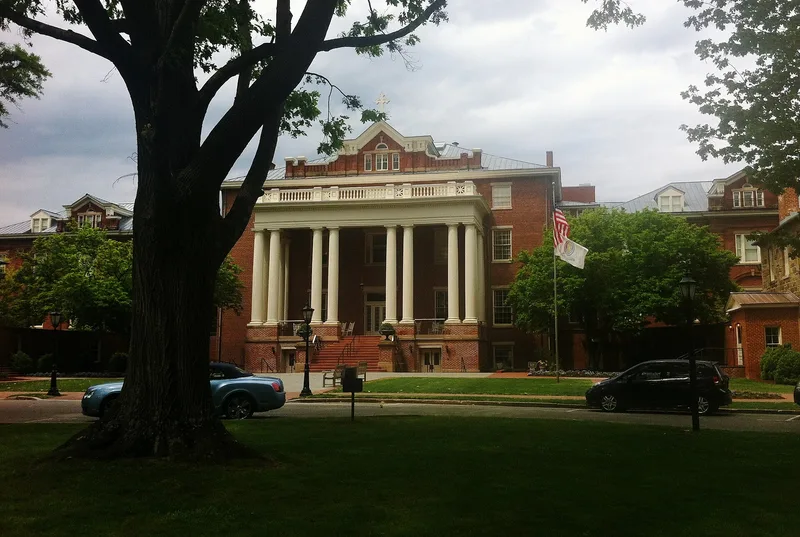
Set in a wooded campus of about twenty-three acres close to the Raleigh state Capitol, St. Mary's began in the 1830s as an Episcopal school for boys. Its earliest buildings, the granite-walled East and West Rocks of 1834 and 1835, were built from stone left over from the Capitol's construction. Smedes Hall, a four-storey brick building begun in 1835 by contractor William S. Drummond, anchors the grounds. Reopened as a girls' school in 1842 under Reverend Aldert Smedes, the institution educated young women from across the South for more than a century. Its campus shows the sequence of styles from the Greek Revival of the antebellum period to the Gothic and Neo-Classical work of the late nineteenth and early twentieth centuries, and it preserves a rare green space in a city that has largely lost its Hillsborough Street mansions.
Machine-generated summary. This summary was generated by a language model from the official nomination document and has not been reviewed line by line by an editor. It may contain errors. Check the source document before relying on any detail. Source: nomination document (PDF) · catalog entry. Generated October 2026 (model claude-haiku-5-5, prompt v1.1-2026-10-29).
| Period of significance | 1800-1899 |
|---|---|
| Styles | Greek Revival; Neo-Classical Revival; Gothic Revival; Late Gothic Revival; Neo-Colonial |
| Areas of significance | Education, Architecture |
| Acreage | 16 |
| Boundary source | NPS cultural-resource GIS polygon |
| Full listing page | St. Mary's College (property record) |
What listing means for this property
This is a historic district. Buildings within its boundary are either contributing (they add to the district's significance) or non-contributing. Owners of contributing income-producing buildings can claim the 20% federal rehabilitation tax credit; homeowners should look at state credits. National Register districts impose no design review by themselves; a local historic district ordinance, if one exists, does (the difference explained).
General information, not legal or tax advice. Rules change; confirm with your State Historic Preservation Office or a qualified adviser.