Southport Historic District

Why it's listed
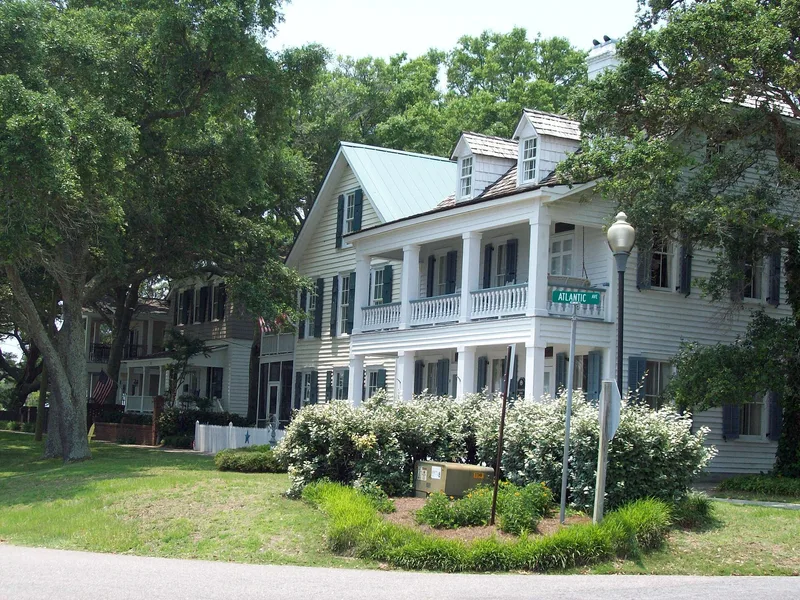
Southport is a small coastal town at the mouth of the Cape Fear River, first laid out in 1792-93 as Smithville. Its livelihood long depended on river piloting, guiding ships past shoals to Wilmington. Most of the district's buildings date from 1885-1905, when a surge of speculation and the opening of local brick and lumber companies led to about a hundred new houses in the years 1889-1896. Local carpenters such as the Daniel brothers and A. J. Robbins built modest one- and two-story frame dwellings using traditional plans like the double cottage and side passage house, rather than copying national styles. Brick commercial buildings on East Moore Street followed in the early twentieth century. Live and water oaks canopy the uncurbed, winding streets, and fishing boats and docks add to the town's character. The district was listed because it offers an unusually complete picture of Victorian building practice in a small North Carolina town.
Machine-generated summary. This summary was generated by a language model from the official nomination document and has not been reviewed line by line by an editor. It may contain errors. Check the source document before relying on any detail. Source: nomination document (PDF) · catalog entry. Generated October 2026 (model claude-sonnet-5-5, prompt v1.0-2026-10-29).
| Styles | Vernacular Victorian; local building tradition with some Greek Revival, Colonial Revival and bungalow elements |
|---|---|
| Areas of significance | Transportation, Architecture |
| Acreage | 112 |
| Boundary source | NPS cultural-resource GIS polygon |
| Full listing page | Southport Historic District (property record) |
What listing means for this property
This is a historic district. Buildings within its boundary are either contributing (they add to the district's significance) or non-contributing. Owners of contributing income-producing buildings can claim the 20% federal rehabilitation tax credit; homeowners should look at state credits. National Register districts impose no design review by themselves; a local historic district ordinance, if one exists, does (the difference explained).
General information, not legal or tax advice. Rules change; confirm with your State Historic Preservation Office or a qualified adviser.