Main Street Historic District

Why it's listed
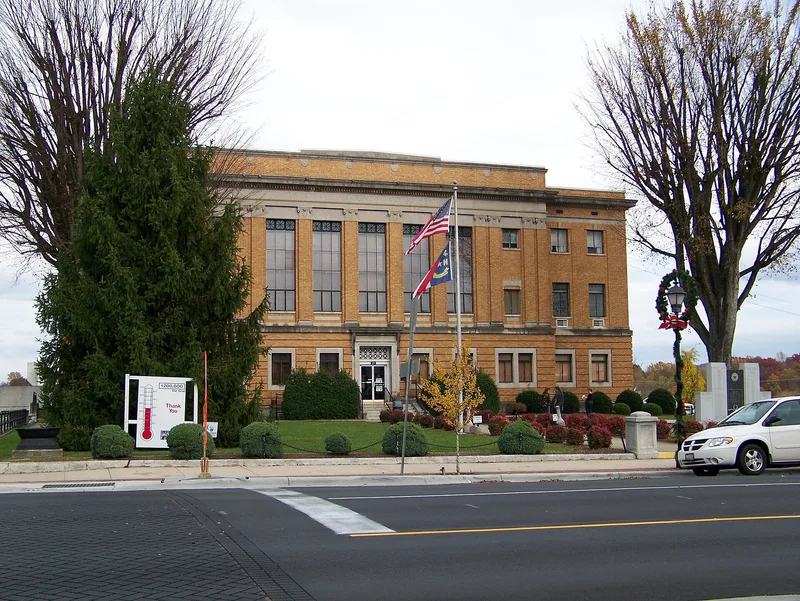
Brick commercial buildings line both sides of Main Street in Marion, a mountain town at the base of the Black Mountains, forming a tight district of mostly early twentieth-century blocks. Most were built after the town's 1894 fire, which destroyed nearly everything along the street except the Hotel McDowell, built about 1894 and the oldest surviving building in the district. Growth accelerated after the railroad reached Marion in 1870, and the Commercial Bank of Marion was founded in 1896. Its successor, the First National Bank building of 1903, has a large corner cupola. The 1923 county courthouse, designed by Erle Stilwell of Hendersonville, stands set back on a hill and is among the best Neoclassical Revival buildings in western North Carolina. The 1914 First Baptist Church and the 1937 Community Building, built of native stone under the Works Progress Administration, are also notable. The district remains the county's seat of government and its largest commercial area.
Machine-generated summary. This summary was generated by a language model from the official nomination document and has not been reviewed line by line by an editor. It may contain errors. Check the source document before relying on any detail. Source: nomination document (PDF) · catalog entry. Generated October 2026 (model claude-haiku-5-5, prompt v1.1-2026-10-29).
| Period of significance | 1894-1937 |
|---|---|
| Styles | Commercial style; Classical Revival; Bungalow/Craftsman; Late Gothic Revival |
| Areas of significance | Commerce, Architecture, Politics/Government |
| Acreage | 21 |
| Boundary source | NPS cultural-resource GIS polygon |
| Full listing page | Main Street Historic District (property record) |
What listing means for this property
This is a historic district. Buildings within its boundary are either contributing (they add to the district's significance) or non-contributing. Owners of contributing income-producing buildings can claim the 20% federal rehabilitation tax credit; homeowners should look at state credits. National Register districts impose no design review by themselves; a local historic district ordinance, if one exists, does (the difference explained).
General information, not legal or tax advice. Rules change; confirm with your State Historic Preservation Office or a qualified adviser.